
Buyers ask this question expecting a number. The honest answer is that there is no single number — but there is a calculation, and most buyers run it wrong by comparing purchase price instead of five-year cost.
This article gives you the framework, the variables that actually move the result, and the situations where petrol still wins.
Table of Contents
- The variables that decide it
- 1. Energy cost: the gap is large but not infinite
- 2. Maintenance: fewer parts, but not zero
- 3. The battery is the real recurring cost
- 4. Where petrol still wins
- 5. The comparison most buyers should actually run
- Frequently asked questions
- Next step
Five variables decide whether electric or petrol is cheaper for your operation. Only one of them is the purchase price.
| Variable | What it does |
|---|---|
| Energy cost per km | Depends entirely on your local electricity tariff versus your local fuel price |
| Daily distance | The further you run, the more the cheaper energy source wins |
| Load factor | Heavy, continuous loads favour torque — which favours diesel, not petrol |
| Charging availability | No reliable charging = electric is not an option, regardless of the maths |
| Battery replacement cycle | Lead-acid every 2–3 years, lithium commonly 5+ years — this is a recurring cost, not a one-off |
Run those five against your own numbers. The rest of this article explains what usually falls out.
1. Energy cost: the gap is large but not infinite
Electricity per kilometre is typically a small fraction of petrol per kilometre in most markets — often a quarter or less, depending on tariff and fuel price. That gap is the main reason fleet operators switch.
Two things blunt it in practice:
Charging losses and time. A pack that takes 7–9 hours to charge is not available for a second shift unless you have two packs or two vehicles. Charging time is a hidden capacity cost, not a line item.
Tariff structure. Commercial electricity in some markets is priced closer to fuel than households expect, particularly where demand charges apply to charging several vehicles at once.
The honest comparison is cost per working kilometre, not cost per kWh.
2. Maintenance: fewer parts, but not zero
An electric drivetrain has no oil, no filter, no clutch, no exhaust, no spark plugs. Over five years that removes a large share of routine service cost, and it removes most of the roadside failure modes that stop a vehicle for a day.
What remains on an electric tricycle: tyres, brake shoes, bearings, controller, charger, and the battery. On a petrol tricycle you add engine oil, filters, plugs, clutch and exhaust to that list — plus the labour to service them.
On a fleet of twenty units, the maintenance difference is usually the second-largest line after energy.
3. The battery is the real recurring cost
This is where the comparison is usually decided, and where lead-acid and lithium diverge.
| Lead-acid | Lithium (LiFePO4) | |
|---|---|---|
| Upfront | Lower | Higher |
| Service life | 2–3 years typical | 5+ years commonly quoted |
| Weight | Heavy — reduces payload headroom | Lighter — more of the rated payload goes to cargo |
| Cold/hot tolerance | Poor in extreme heat | Better, but not immune |
| Replacement | Cheaper per pack, more often | Pricier per pack, less often |
A buyer comparing a lead-acid quote with a lithium quote for “the same” tricycle is comparing a vehicle that needs one or two battery replacements inside five years with one that may need none. The purchase price difference usually sits inside that gap.
Weight matters too, and it is routinely ignored: on a 400 kg rated vehicle, a heavier battery pack comes straight out of what you can actually carry.
4. Where petrol still wins
Three situations where the electric case does not hold up:
Long continuous routes without charging. If a vehicle must run 150 km a day with no charging window, electric is not viable at current pack sizes without a battery swap system.
No reliable grid. Diesel and petrol tricycles refuel in five minutes from a jerrycan. If the site has no dependable electricity, the maintenance savings never materialise because the vehicle cannot work.
Heavy continuous haulage. For mining, quarry and heavy construction work, a diesel engine’s torque under sustained load still beats an electric drivetrain on cost per ton moved. This is a different vehicle class from urban delivery — 1 to 5 ton diesel tippers, not 400 kg cargo bodies.
If your operation falls into one of those three, buy the fuel vehicle. Buying electric to save face with a sustainability claim is an expensive way to lose money.
5. The comparison most buyers should actually run
Write these six lines down for your own market. The answer is whichever column comes out lower.
- Purchase price (electric vs petrol, same payload class)
- Energy cost per working kilometre × annual kilometres
- Routine service cost per year
- Battery replacement cost, prorated per year
- Expected downtime days per year × daily revenue lost
- Resale value at year five
Line 5 is the one most spreadsheets leave out, and it is often the largest single difference — a vehicle that loses three days a year to engine trouble costs more than the energy saving is worth.
Frequently asked questions
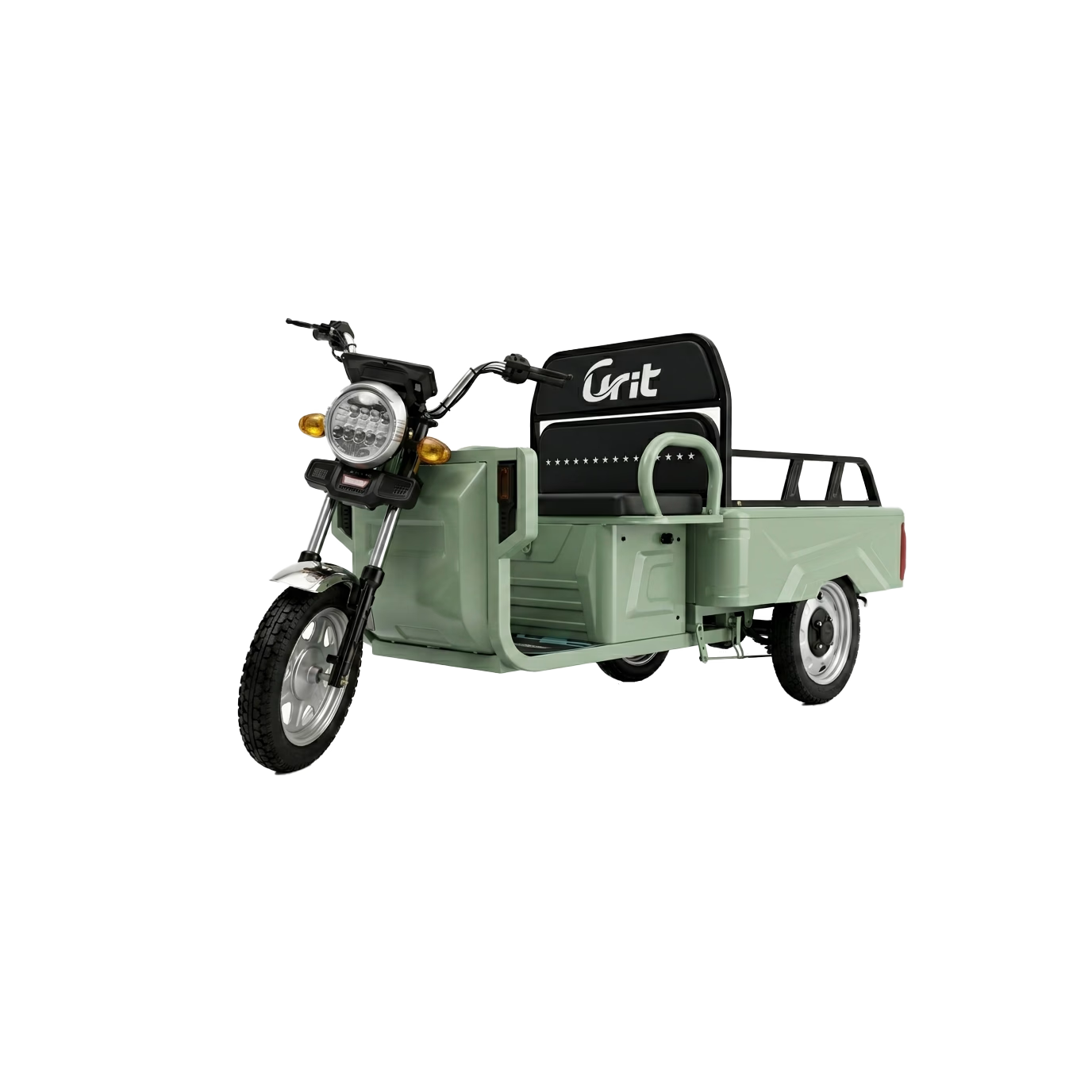
Can I get both from the same supplier? Yes — we build on both drivetrains. The cargo tricycle range covers electric models, including the U3 400 kg cargo tricycle, and a petrol cargo tricycle with a Zongshen engine runs on the same body. Passenger models are available on both drivetrains through the tuk tuk range.
Is diesel available? For heavy haulage, yes — but those are a different vehicle class (1–5 ton bodies), not a variant of the 400 kg urban delivery model. Tell us the load and we will confirm which class fits.
Which holds resale value better? Petrol vehicles hold value in markets where fuel is cheap and electric service is unavailable. Electric holds better where charging infrastructure exists and fuel is expensive. It follows the same logic as the running-cost comparison.
Next step
Send us your route distance, load, charging situation and local fuel and electricity prices. We will run the comparison against our actual specifications rather than industry averages.
Browse the electric cargo tricycle range, or send us your numbers and we will come back with a specification and a factory quote.