
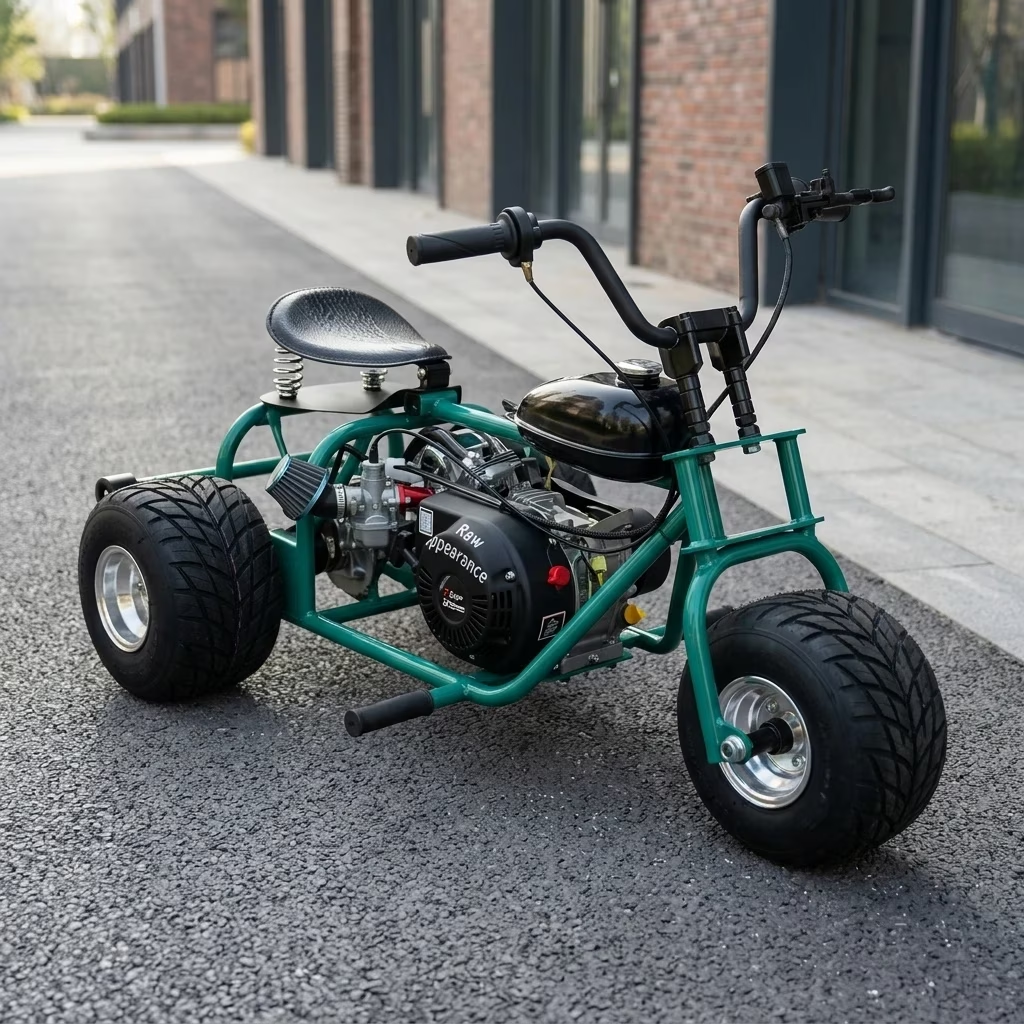
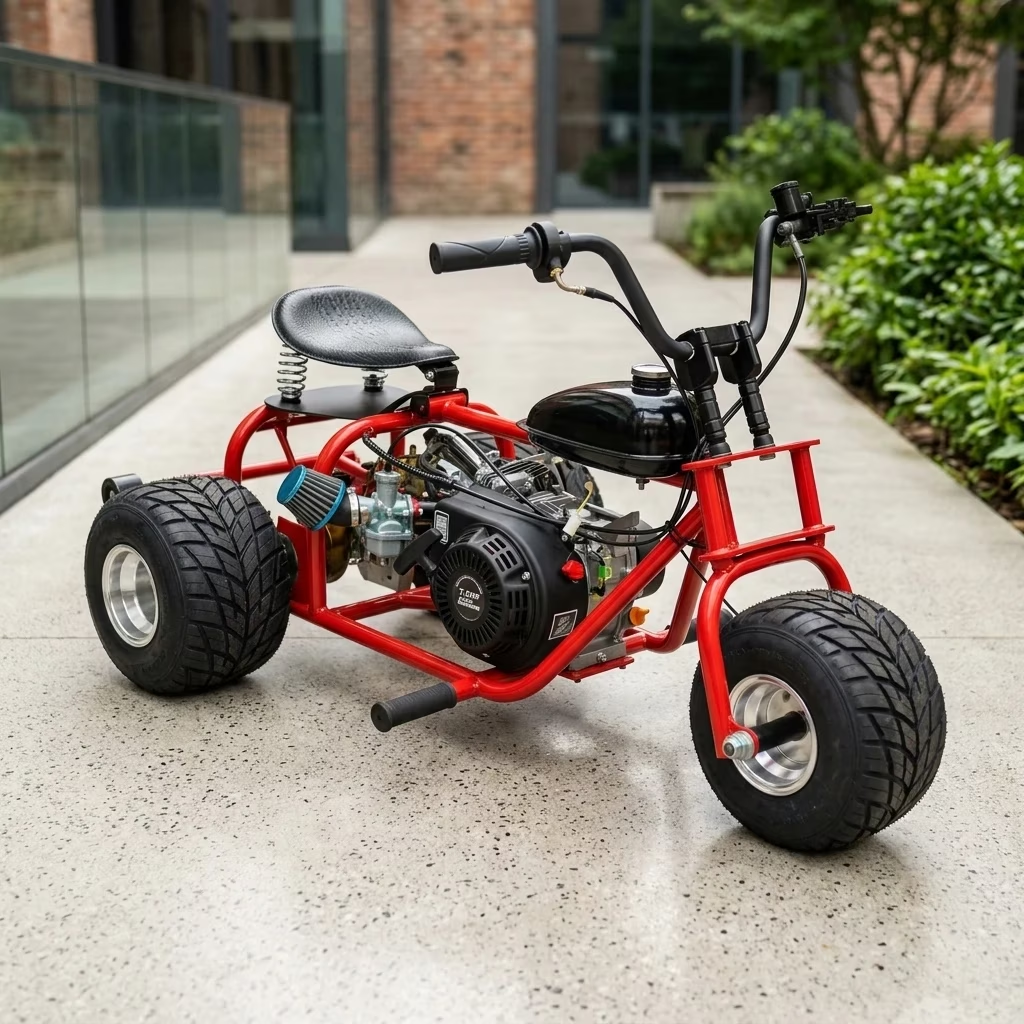
Description
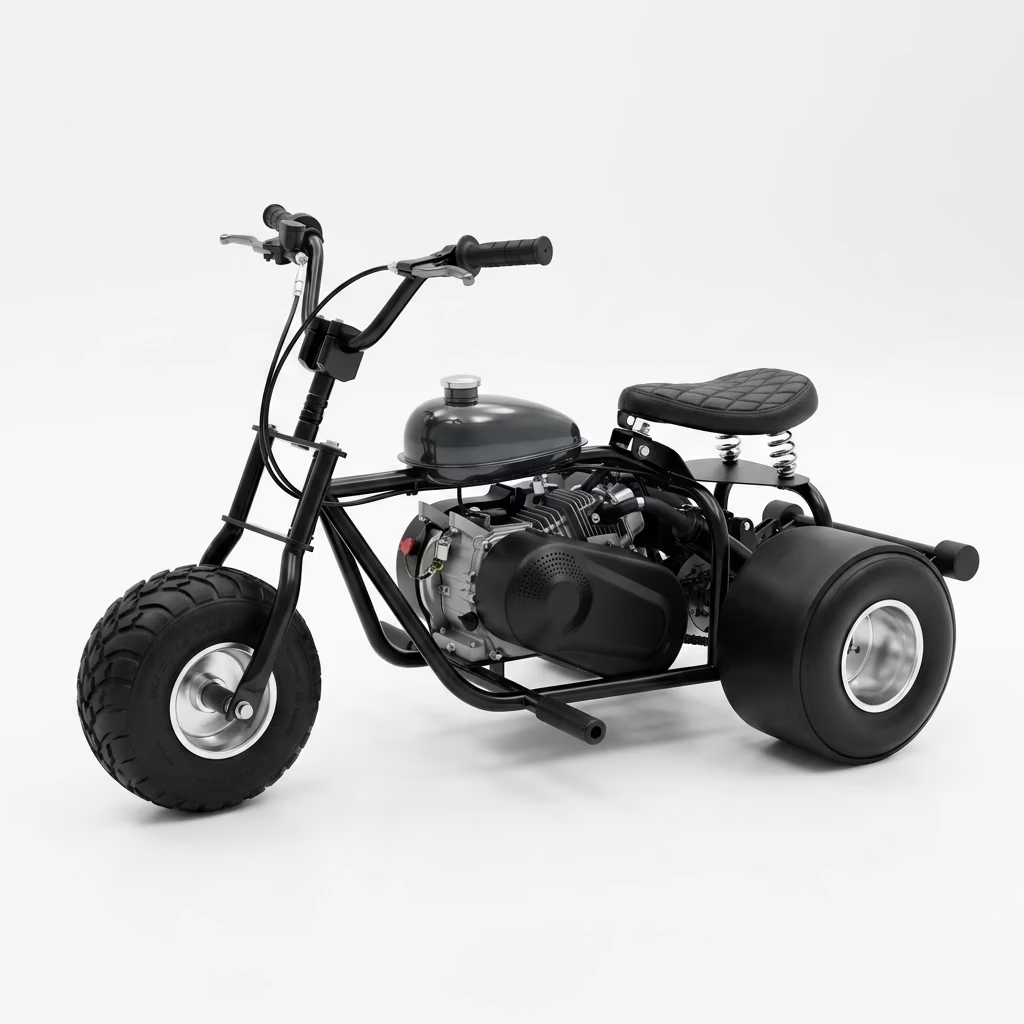
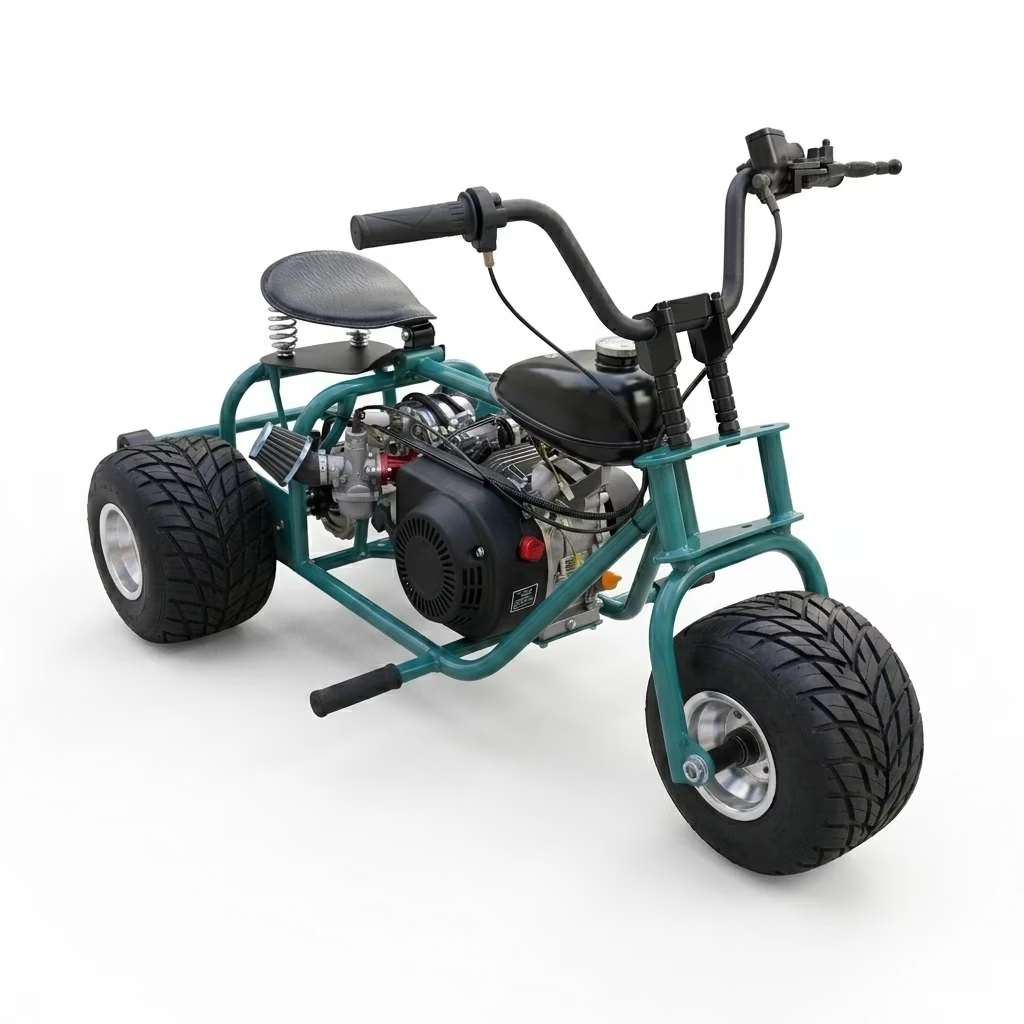
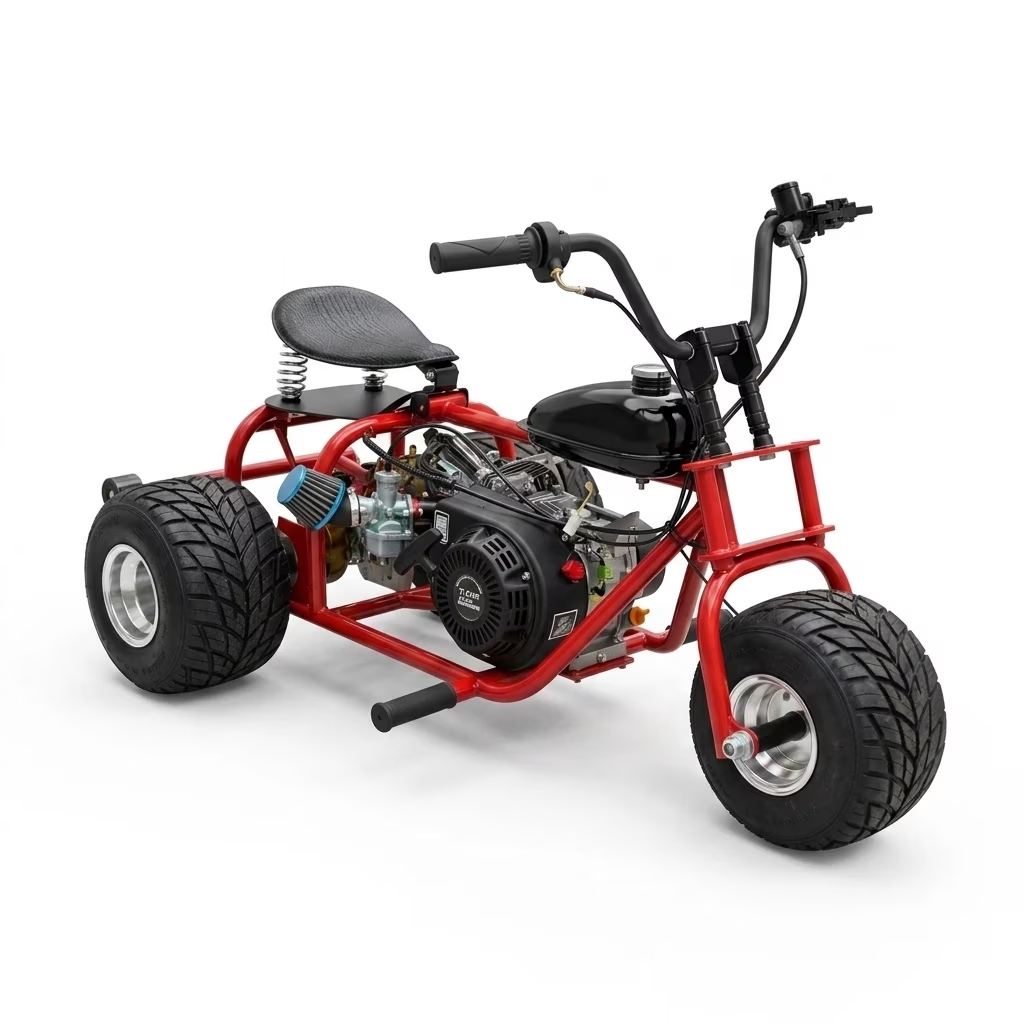
A three-wheel drift kart is not a go kart with a wheel missing. It is a different machine with a different job: it exists to slide, at low speed, under control, for riders who want the drift rather than the lap time. The Urit 3-wheel gas go kart runs a 201–500 cc four-stroke engine, a 45 km/h top speed, a 200 kg load rating and hydraulic disc brakes, and it is sold to rental tracks and private owners in black, blue or red.
Why Three Wheels Drift Better Than Four
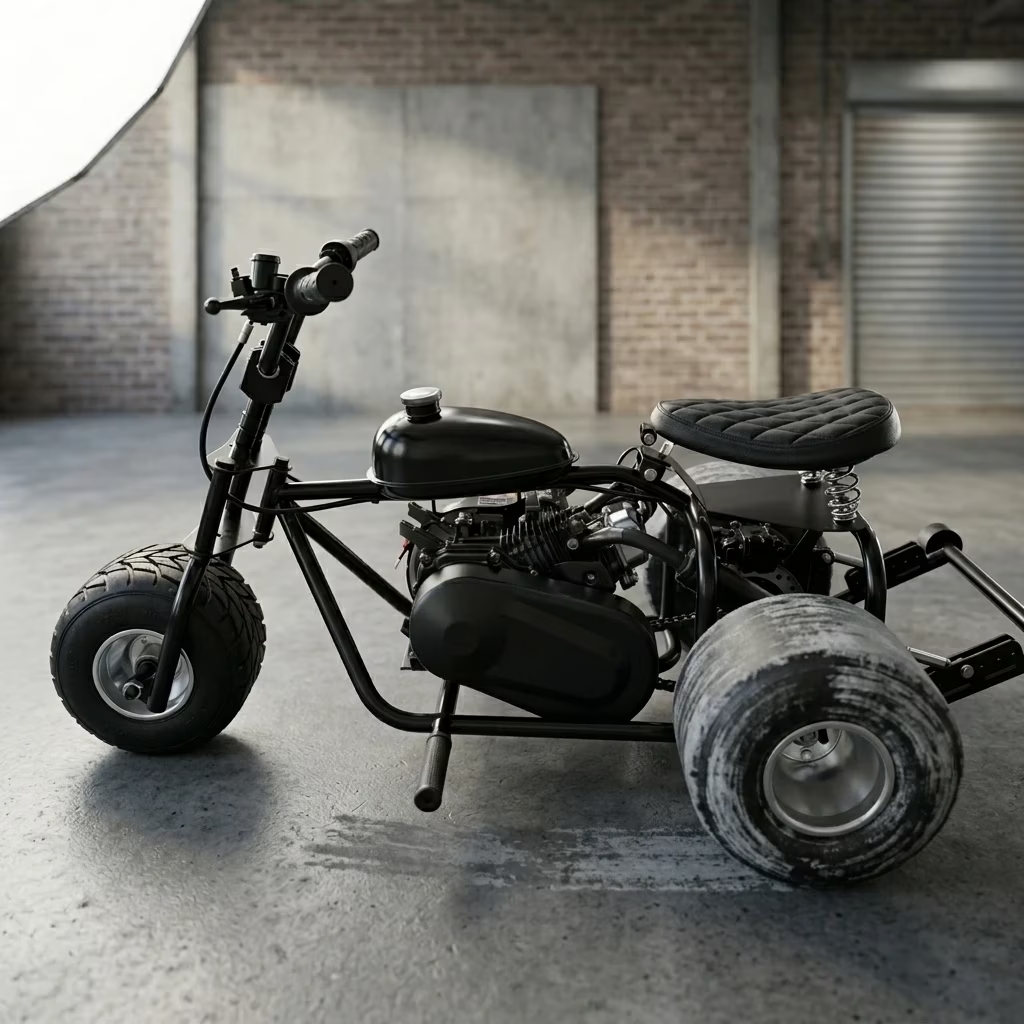
Drifting is controlled loss of rear grip. A four-wheel kart has two contact patches at each end and both axles resist rotation, so breaking the rear away takes power and speed — which is why four-wheel drift machines are fast, expensive and hard on tyres. A three-wheel layout has one wheel at the front and two at the rear, and the rear pair carries drift rings: hard sleeves fitted over the tyres that cut lateral grip without changing the tyre itself.
The result breaks traction early and predictably. The single front wheel sets direction, the short wheelbase lets the body rotate quickly, and the sleeved rear lets go at speeds low enough for a rental session — a rider can hold a slide instead of fighting for one. The trade-off is real: less straight-line stability, less rear braking grip, and a machine that belongs on a track with run-off.
Engine and Drivetrain: 201–500 cc, Chain Drive
The engine is a single-cylinder four-stroke in the 201–500 cc band, rated 10 hp, driving the rear axle through a chain. That combination is chosen for serviceability as much as performance: a four-stroke runs on straight petrol with no oil mixing, and a chain drive is the cheapest transmission to maintain and the easiest to re-gear for a track’s length and surface.
Chain drive means chain maintenance, and that is the operator’s job: tension before each session, lubrication on a schedule, and a look at the sprocket teeth for hooking. A thrown chain at 45 km/h ends a session.
Hydraulic Disc Brakes on a Drift Kart
Drifting means braking while the rear is already sliding, repeatedly, all day. Cable-actuated mechanical brakes lose performance under that duty: the cable stretches, the pull becomes uneven, and heat builds in a system with no hydraulic column to distribute it — which is why fading brakes are the classic failure on rental karts.
A hydraulic disc brake holds a consistent lever feel as pads wear, self-adjusts and manages heat far better. Where riders deliberately unsettle the rear, consistent braking is not a premium feature — it is what makes a session repeatable. The disc is mounted on the front wheel, where the grip is. The rear pair runs drift rings with deliberately low grip, so a rear brake would lock a wheel that is already sliding instead of slowing the kart. If your site prefers a rear-axle disc as well, that can be specified.
Who Buys This: Rental Fleets vs Private Owners
Rental operators buy for throughput: sessions per day, how fast a unit returns to service, whether a spare arrives before the queue does. Their questions are the drift-ring replacement interval, chain and sprocket life, whether a throttle limiter can be set for novice sessions, and whether the service manual ships in English.
Private owners buy for the slide itself: the 45 km/h top speed, the 200 kg load rating that covers most adult riders, and colour choice in black, blue or red. Both groups should check the same three things — parts availability in their market, the tyre size, and whether local rules allow off-road riding where they plan to use it. If lap times matter more than slides, the 420cc four-wheel off-road go kart is the correct machine instead; the full range sits in go karts and drift karts.
Specification Summary
| Model | Urit 3 Wheel Gas Go Kart (drift trike) |
|---|---|
| Wheel layout | Three wheels — one front, two rear |
| Engine | 4-stroke, 201–500 cc |
| Power | 10 hp |
| Max speed | 45 km/h |
| Load rating | 200 kg |
| Brakes | Hydraulic disc brake |
| Drive | Chain drive |
| Tyres | 5 in |
| Fuel tank | 3 L |
| Net weight | 90–98 kg |
| Package size | 1200 × 1040 × 550 mm |
| Drift equipment | Drift rings / sleeves supplied front and rear |
| Riders | Adults and children — confirm minimum rider height with the factory |
| Intended use | Off-road, competitive |
| Colours | Black, blue, red |
Running Cost and Maintenance Interval
Four lines set the cost per operating hour: fuel, drift rings, chain and sprockets, and brake pads. On a rental fleet, the last three matter more than fuel.
- Fuel. The 3 L tank is the planning unit, not the consumption figure. Log tank-to-tank hours over the first 20 operating hours of real sessions, then price fuel per hour from that number — a catalogue figure will not reflect your track surface or how hard your staff let riders run.
- Drift rings. The fastest-wearing item on the machine, and the one that decides how often a kart leaves the track. Inspect weekly, replace when the sleeve wears through to the tyre, and buy rings with the karts — they are light and hard to source locally.
- Chain and sprockets. Tension before each session, lubrication on a fixed schedule, sprocket inspection monthly. Replace the pair together: a new chain on a hooked sprocket wears out in weeks.
- Brake pads. Check with every ring change. Hydraulic systems self-adjust but pads still wear, and pad life depends on track layout — the factory can give a baseline.
Build the session price from those four lines plus labour footprint, and ship the spares kit in the same container — separate parts freight usually costs more than the parts. Send your fleet size and track details and we will quote karts, rings and spares together.
Frequently Asked Questions
Is this kart suitable for children?
Not for young children. The machine is specifiable for adults and older teenagers; rider height, seat position and throttle control decide what is safe on your site. Set a throttle limit for novice sessions and treat the briefing as part of the product.
Does a four-stroke need fuel mixed with oil?
No. Four-stroke engines run on straight pump petrol; only two-strokes need oil mixed in. That removes the most common fuelling mistake in a rental operation.
Can it be registered for road use?
No. This is an off-road vehicle for tracks and private land, and this page makes no road-legality claim. Requirements differ by market — check with your local authority before planning any route that touches a public road.
What warranty applies?
The frame carries 24 months. For a petrol model the engine and drivetrain carry their own terms — ask the factory to confirm which components map to which period, in writing, with the quotation.

Reviews
There are no reviews yet.