
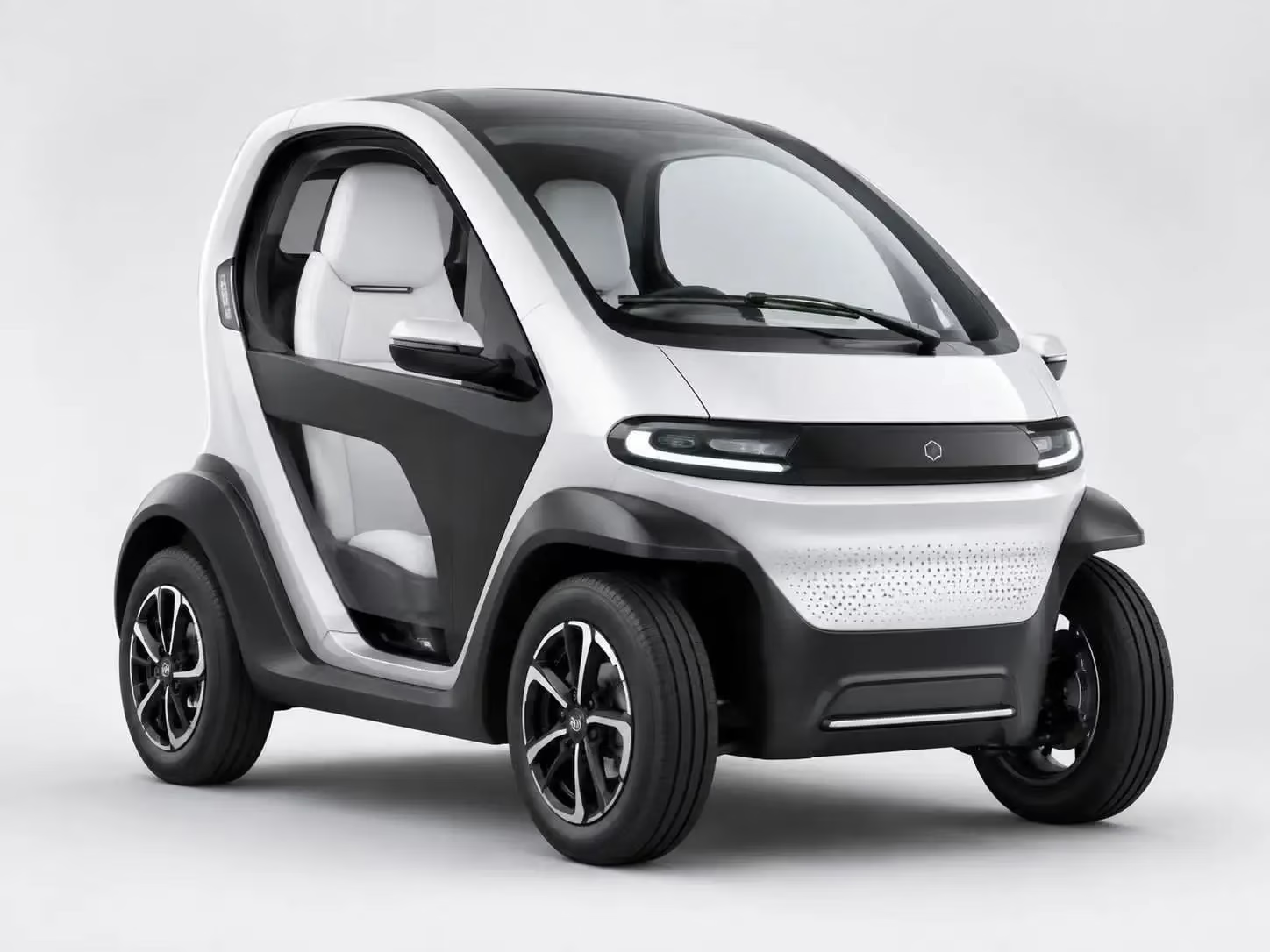
Three vehicles that look alike in a photograph can sit in three different regulatory classes. The class decides the paperwork, the registration, the insurance, where the vehicle may be driven and sometimes whether your customer can legally sell it at all. Get it wrong and the container is fine, the vehicle is fine, and nobody can put it on the road.
This article sets out the three classes buyers ask about most — golf cart, LSV and mini EV — and what each one means for an importer. It does not tell you what is legal in your market, because that is a question for your authority, not for a factory in Beijing.
Three Names, Three Different Rules
These are not trim levels or marketing words. A class is decided by three things: the vehicle’s top speed, its equipment — lights, seat belts, mirrors, wipers, horn — and how the destination authority chooses to treat it. The third one is the one buyers underestimate, because it is not written on any specification sheet.
That is why the same cart can arrive in one market as an off-road vehicle with no registration at all, and in another as a registrable low-speed vehicle with an equipment list attached. It is also why “road legal” is a meaningless phrase without a country, and often without a state or province.
The working rule for this whole page: classify first, specify second. Start from where the vehicle will actually be driven and at what speed, then work backwards to the equipment and documents that class requires. Buyers who start from the product and look for a class afterwards are the ones who end up with stock they cannot move.
Golf Cart: Private Property by Default
The default assumption for this class is private property: golf courses, estates, resorts, campuses, warehouses, event sites. In most jurisdictions that use does not require road-vehicle type approval, which makes the class the easiest to import and the easiest to misuse.
What makes it a golf cart is not the badge but the design intent: low speed, open body, turf-friendly tyres, minimal lighting, bench or 2+2 seating, built for short hops rather than traffic. Our 4 seat electric golf cart is typical of the class — four seats, 48V, designed around a course loop rather than a road.
The risk is a buyer with a road plan. If your customer says “street”, “registration” or “my customers will drive it to the beach”, the conversation has moved to a different class and the golf cart is the wrong answer. Bolting on headlights and seat belts does not change how an authority classifies the vehicle; in some markets it can make the position worse, because the vehicle is now neither a clean off-road unit nor an approved road vehicle.
LSV: The US Category With a Speed Cap
In the United States there is a federal category called a low-speed vehicle, or LSV. It is defined by a capped top speed and a required equipment list — lights, seat belts, mirrors and similar items. The 25 mph figure most buyers quote comes from that federal definition; confirm the current wording with your US importer or broker rather than relying on a supplier’s brochure.
The federal definition is not permission to drive. States set registration, title, insurance, minimum age or licence requirements and, critically, which roads the vehicle may use. A vehicle that meets the federal equipment list can still be unusable in one state and straightforward to register in another. That is not a quirk; it is how the framework is built.
So the LSV conversation has two stages, and they should never be merged:
- Does the vehicle meet the equipment and speed requirements of the category? That is a specification question, and the factory can answer it for a specific model — in writing.
- Will your state register it, and where may it be driven? That is a legal question for the customer’s DMV, and only a written answer from them counts.
One warning for importers: “LSV” is not a marketing upgrade. If a vehicle cannot reach the required speed or lacks the equipment, calling it an LSV in a listing does not make it one, and the buyer who discovers that at the counter is a buyer who returns the container.
Mini EV: The Category That Changes by Country
Outside the US, the class usually comes from a different framework, and the frameworks do not agree with each other. Europe handles small quadricycles through its own approval route, with speed and power limits that define the sub-categories. Other markets may classify the same vehicle as a motorcycle, as a passenger vehicle, or as something with no existing category at all — and the last case is the hardest, because the importer is then helping to create the paperwork rather than follow it.
Practically, that means the question is never “is a mini EV road legal”. It is “which class will my authority put this vehicle in, and what does that class require”. Two buyers importing the same SKU into two countries can be looking at two entirely different document sets, two different equipment lists and two different answers on who may drive it.
The product side is straightforward: a small enclosed electric car sold for urban and estate use, in the same family as our electric mini EV for urban families, the compact enclosed electric car, 201-300 km range and the all-weather enclosed mini EV. What changes by market is not the vehicle — it is the class it lands in.
A Comparison Table
| Golf cart | LSV (US) | Mini EV | |
|---|---|---|---|
| Typical top speed | Low, model dependent | Capped by the category | Higher than either; model dependent |
| Typical use | Course, estate, resort, campus | Local roads where the state permits | Urban and suburban trips |
| Registration | Usually none, private land only | State-level; varies | Country-level; class dependent |
| Approval and documents | Rarely required for private use | Equipment list plus state process | Framework-specific; can be the hardest |
| Main buyer risk | Buying it for road use | Assuming federal rules equal state permission | Assuming one country’s class fits another |
| Who answers the legal question | Local authority, if a road is involved | The customer’s DMV, in writing | Customs or type-approval authority |
Read the table as a map of who to ask, not as a legal opinion. Every row except the first is decided outside the factory.
What to Ask Before You Import
- Which class will this be in my market? Ask the authority or a customs broker, in writing, before the order — not after the container arrives.
- What does that class require? Documents, equipment, tests, labels, and who issues them. Get the list, not a summary.
- Can the factory supply conformity documents for this exact model? Which model, which body, which battery — a document for a different configuration does not travel.
- What may be modified, and what may not? Speed limiters, lights and belts are the usual requests; changing them after approval can void it.
- Who supports the vehicle locally? A registrable vehicle without parts and service in the market becomes a liability, not a product.
If the paperwork path is unclear, start with private-property use and earn the road category later. The golf carts and electric mini EV range pages show what is available in each family, and we will confirm in writing what documentation we can supply for a specific model and destination.
Frequently Asked Questions
Can I drive a golf cart on a public road?
In most markets, no — not as a golf cart. Some jurisdictions allow a cart that meets a low-speed vehicle category to be registered and used on specified roads, but that is a different class with a different equipment list. Ask your local authority for a written position before planning any route that leaves private land.
Is an LSV just a golf cart with lights and belts?
No. The category has a speed requirement as well as an equipment requirement, and it is the combination that matters. A cart that cannot meet the speed figure is not an LSV regardless of how it is equipped, and a vehicle that meets both still needs state registration before it can be used on a road.
Can a mini EV be imported as a motorcycle?
In some markets, yes — the classification can follow wheel count, power or speed rather than body style. In others it cannot, and the vehicle needs a passenger-vehicle category that may not yet exist. This is precisely the question to put to your customs broker or authority in writing, because the answer changes the documents, the duty and sometimes the driver’s licence.
What is the safest first order?
Buy for private-property use first: course, estate, resort, campus. That use avoids the registration question entirely in most markets and lets you test demand before committing to a road-legal programme. Add road-use models once you have a written path from the authority and a local partner who can handle registration.