
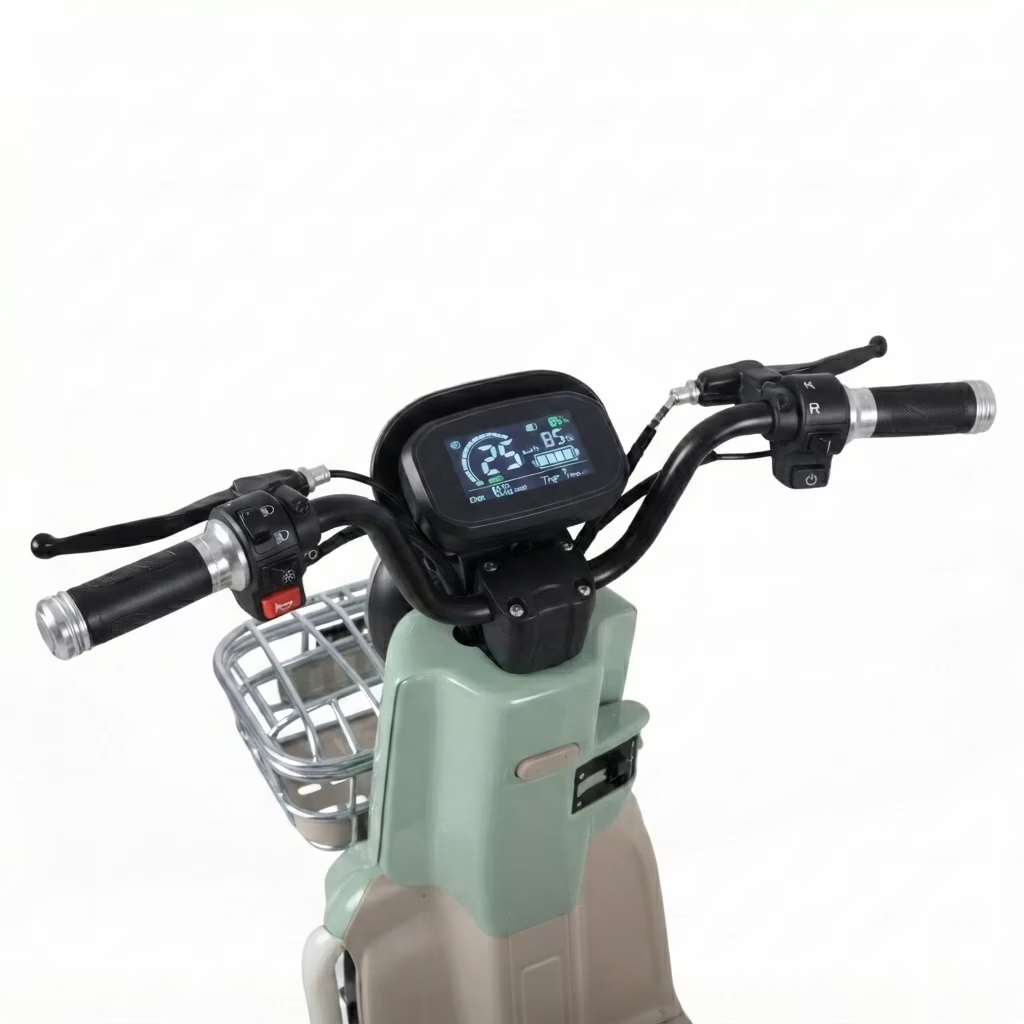
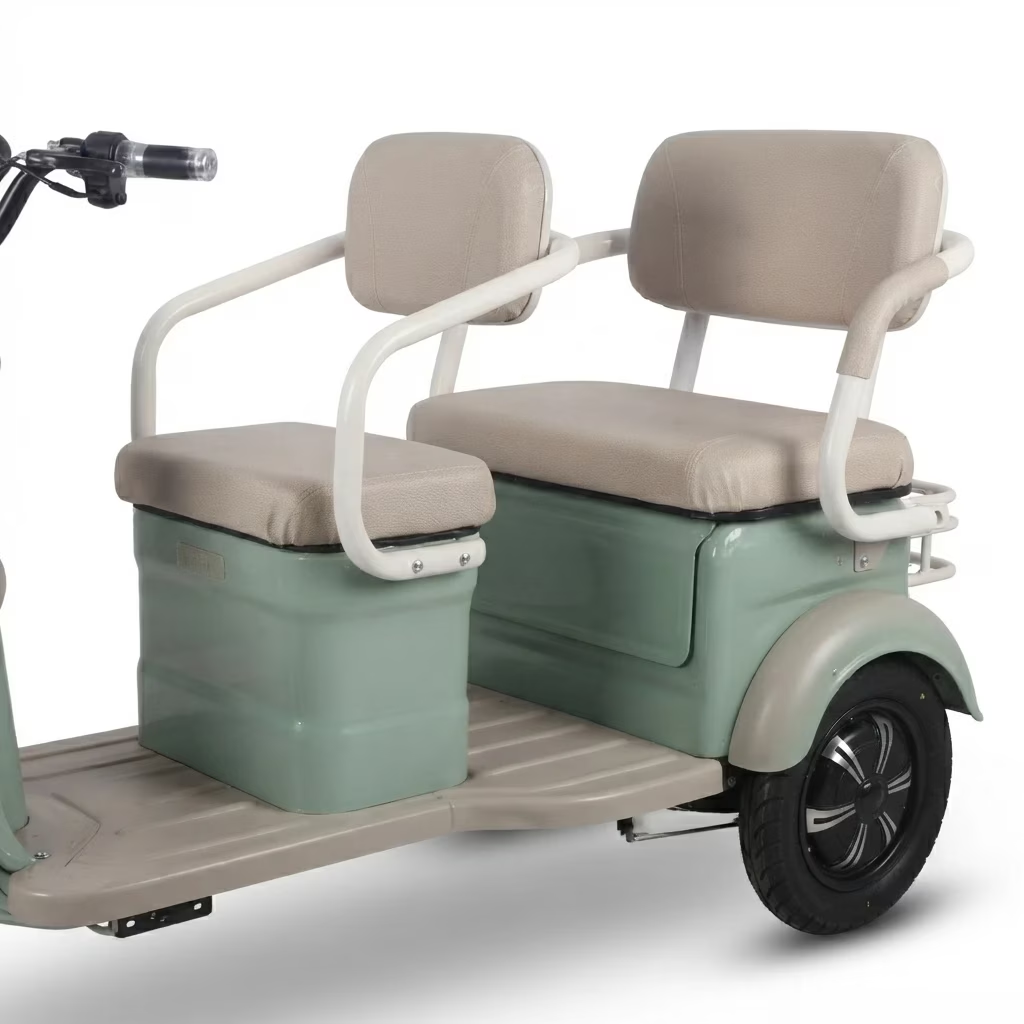
Description
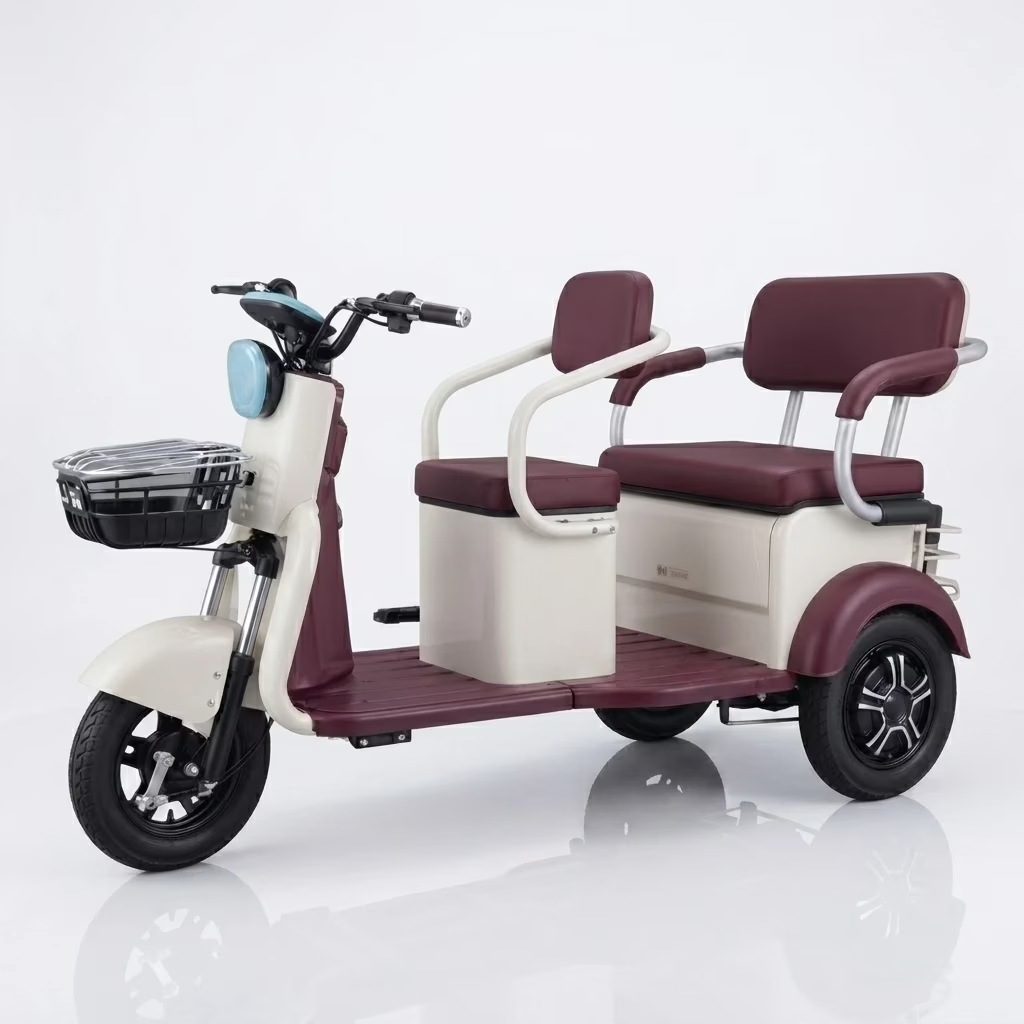
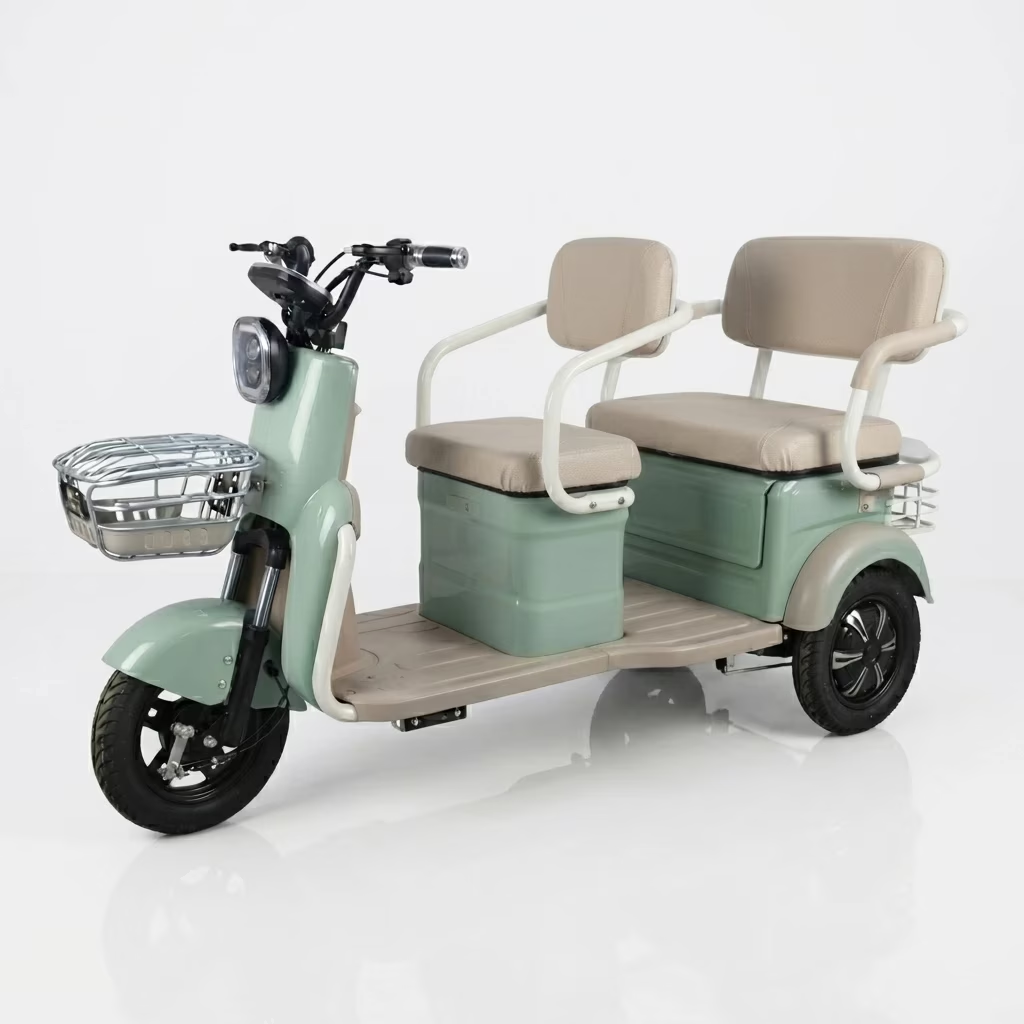
Two seats on three wheels is a different product from a cargo trike. This is a short-trip passenger vehicle: the school run, the market run, a clinic visit, the trip that is too far to walk and too short to justify a car. There is no load bed, because the job is carrying people, not freight.
The Urit two-seat tricycle runs a 60V system with a 501–800W motor, a 70–90 km range, a 20–25° climb rating and a step-through frame. Below is what those numbers mean on a daily route, and where this vehicle is the wrong choice.
Two Seats, and Who It Is For
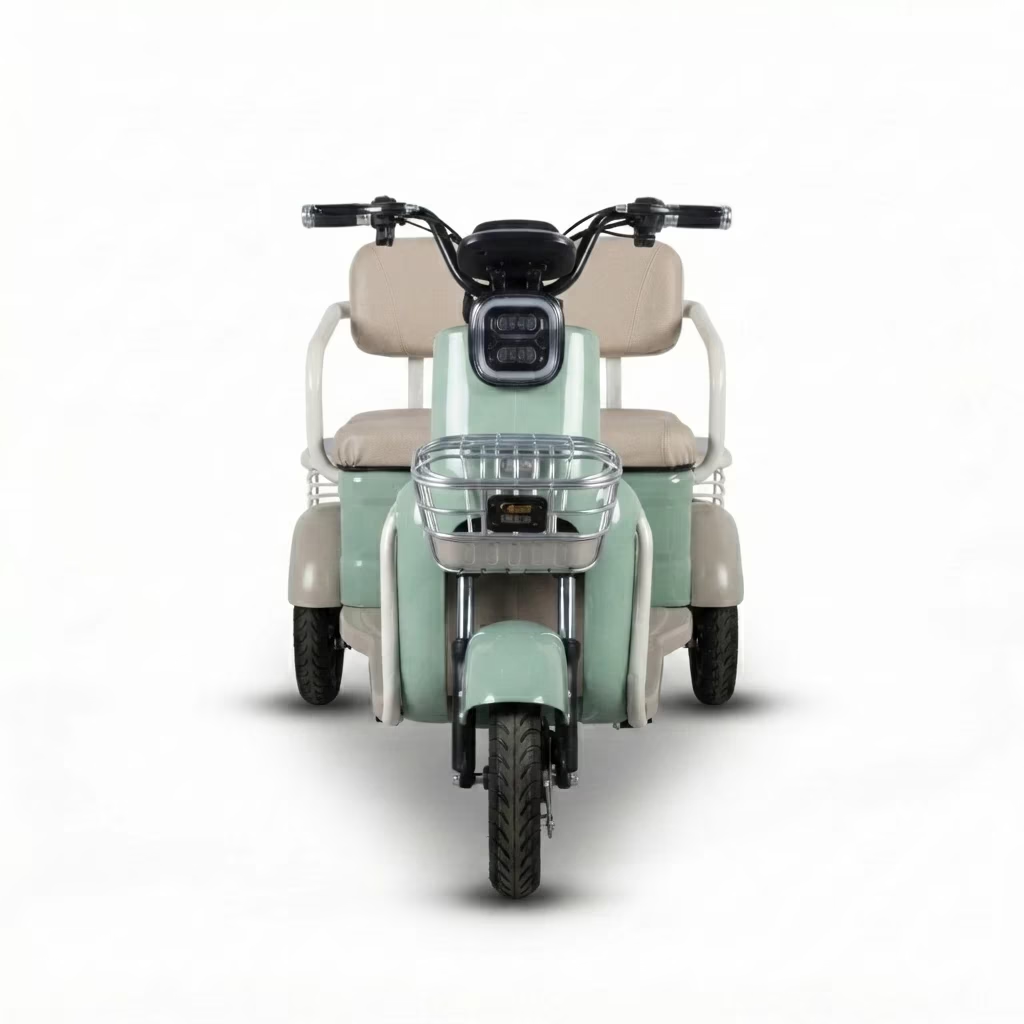
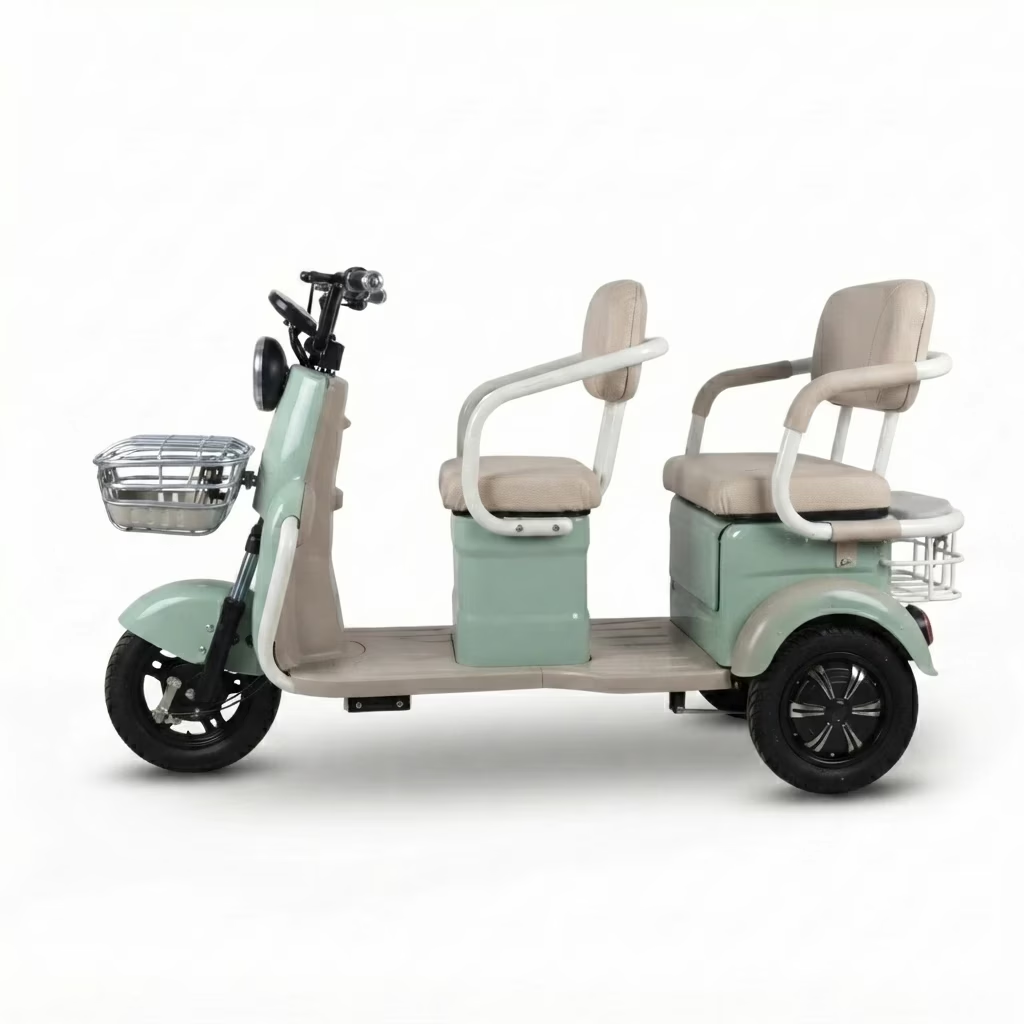
The seats are arranged in line: the driver in front, one passenger behind. That layout is what makes the vehicle narrow enough for a footpath-width lane and short enough to park where a car cannot.
It suits four kinds of use:
- One adult plus one child — the school run, where a second seat is the whole point.
- One adult plus one older passenger — a clinic or market trip with someone who cannot walk the distance.
- Community and campus errands — a site vehicle for staff moving between buildings.
- Rental and shared use — a low-speed unit for resorts, marinas and residential compounds.
It does not suit three cases: two large adults over a long distance, any route that needs weather protection, and any route above 30 km/h in traffic. For those, an enclosed body or a wider four-wheel vehicle is the correct answer.
70–90 km on a Daily Errand Route
The range is measured part-loaded on flat ground. An errand route is short and repetitive, which works in this vehicle’s favour — but three things still cut into the figure:
- Two adults on board. The payload rating covers it, but every acceleration costs more.
- Cold mornings. Usable capacity drops in low temperatures and recovers as the pack warms.
- Pack age. A lead-acid pack in its third year will not deliver its day-one figure.
A worked example: four trips a day at 6 km each is 24 km. Add the detours and a loaded return leg and call it 30 km. On a 70 km floor that is two to three days between charges — which is why the daily pattern matters more than the headline range.
60V 501–800W and a 20–25° Climb
A 501–800W motor on a 100–200 kg vehicle with up to 300 kg of payload is sized for level running and residential gradients. The 20–25° rating is what it will climb loaded; it is not a hill-climb figure.
Two conditions matter in practice:
- Long climbs. A short ramp is fine. A sustained gradient above 20° pulls speed down and heats the controller — if your route has one, specify the higher-power option.
- Wet surfaces. The 300-8 tyres are narrow. On wet tiles, painted metal or loose gravel, traction limits the climb before the motor does.
The 30 km/h top speed is deliberate. This is a footpath-and-service-road vehicle, and the low ceiling is part of what makes it usable where a scooter is not.
Step-Through Frame and Low Floor
There is no frame tube to swing a leg over: the floor between the wheels is low and flat, and both seats sit above it. That single detail is why this layout works for older riders and for anyone in a skirt or a long coat.
The front carrier basket takes shopping bags and a handbag. The platform between the seats takes a box or a folded stroller. Neither is a substitute for a load bed — the rated 200–300 kg payload covers passengers and their belongings, not freight.
Specification
| Model | Urit 2 seat electric tricycle, open body |
|---|---|
| Seats | 2 (driver + 1 passenger, in line) |
| Body type | Open, step-through frame with low floor |
| System voltage | 60V |
| Motor | 501–800W |
| Battery | Lead-acid or lithium — quoted separately from the vehicle price |
| Range per charge | 70–90 km (test condition; see range section) |
| Max speed | ≤30 km/h |
| Grade ability | 20–25° loaded |
| Charge time | 7–9 h with supplied charger |
| Brakes | Front drum + rear drum |
| Tyres | 300-8 |
| Payload | 200–300 kg |
| Curb weight | 100–200 kg |
| Overall dimensions | 2000 × 900 × 1200 mm |
| Colours | Black, white, red, orange, green, yellow |
| Certification | CE — confirm which model and battery configuration the document covers |
| MOQ / Warranty | 1 unit / 12 months on motor, controller and battery |
Charging at Home
A 7–9 hour charge is an overnight charge on a domestic circuit. Two things to settle before the container ships:
- Charger voltage and plug. 110V and 220–240V markets need different units, and 50 Hz against 60 Hz is not interchangeable. Specify the destination, not just the country.
- Whether the pack is removable. If your customers live upstairs, a pack that lifts out and charges indoors changes the buying decision. Confirm the configuration with us before ordering.
What to Confirm Before Ordering
Four items decide whether this vehicle works in your market:
- Battery chemistry and capacity. Lead-acid is cheaper and fine for one charge a day; lithium is lighter and tolerates partial charging. Ask for Ah and cycle count in writing.
- Spare parts package. One controller, one charger, a set of brake shoes, a set of tyres and tubes, and one key set per ten vehicles. Ship it in the same container.
- Container loading quantity. Ask for 20GP and 40HQ figures against your exact configuration; assembled and semi-knocked-down are different numbers.
- CE certificate scope. Ask which model and battery configuration the document covers — a certificate for a different pack does not automatically cover yours.
Frequently Asked Questions
Does the driver need a licence?
That is set by your market, not by the vehicle. Some countries treat a 30 km/h three-wheeler as a moped or motorcycle class, others as a light vehicle, and some have no category for it at all. Confirm with your licensing authority before importing.
Can it carry two adults?
Yes, within the 200–300 kg payload. The second seat is sized for an adult, though two large adults will find it a tight fit over a long trip. For regular two-adult use over distance, a wider body is more comfortable.
Can it carry cargo instead of a passenger?
Only light items. The front basket and the platform between the seats take shopping and a small box; there is no load bed, and the payload rating assumes passengers. If freight is the job, a cargo tricycle with a steel box is the correct vehicle.
How long does a charge last in real use?
On a short errand route — 20 to 30 km a day — two to three days between charges is realistic at the 70 km end of the range. Cold weather and a second adult on board shorten that; plan on charging more often in winter.
Comparing layouts? The electric tricycle range covers two-seat, three-seat and enclosed bodies, and the vintage three-wheel leisure trike is the same footprint with a different body style. Tell us your route, daily distance and destination port, and we will quote the battery option and loading quantity as one landed cost — send your requirement here.