
Description
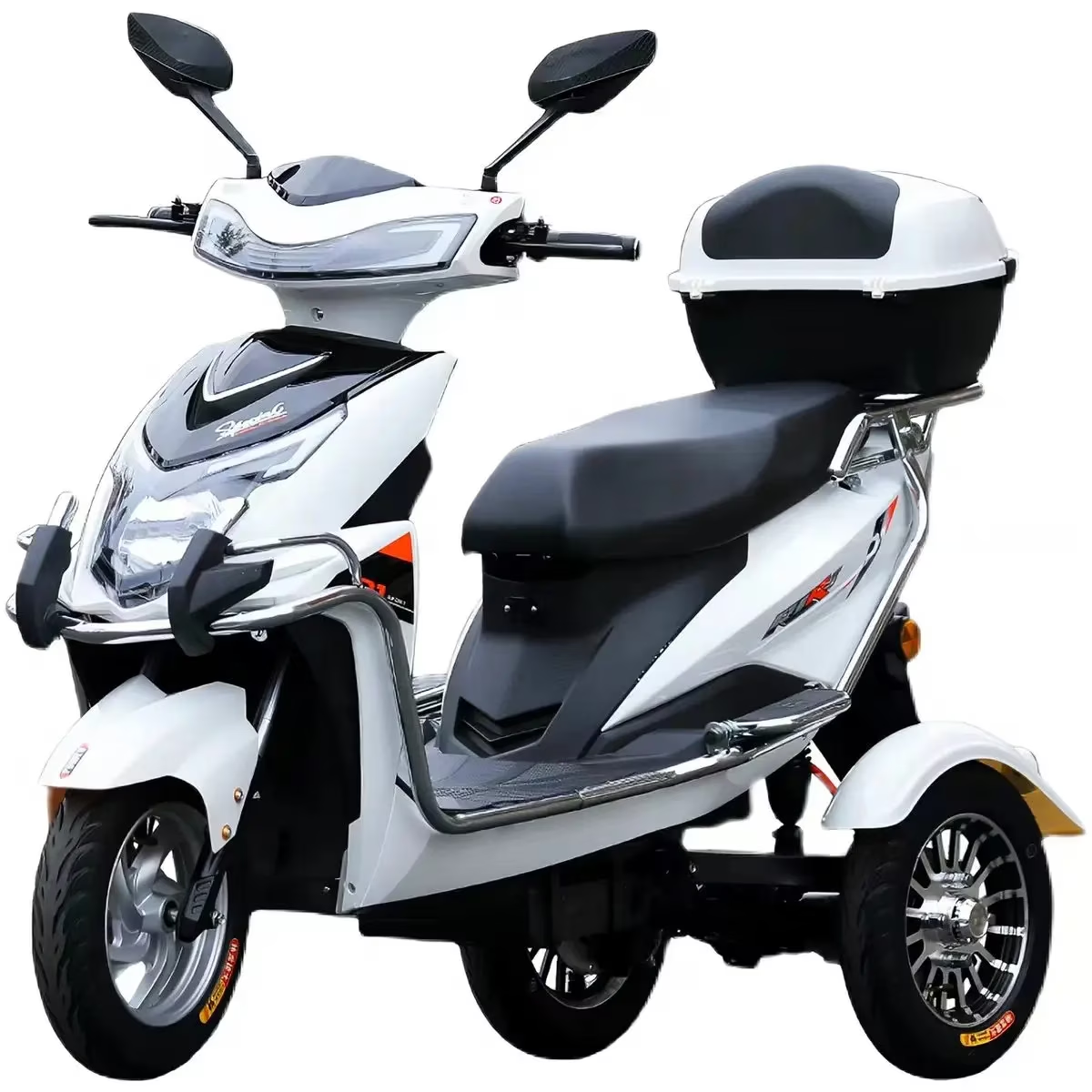
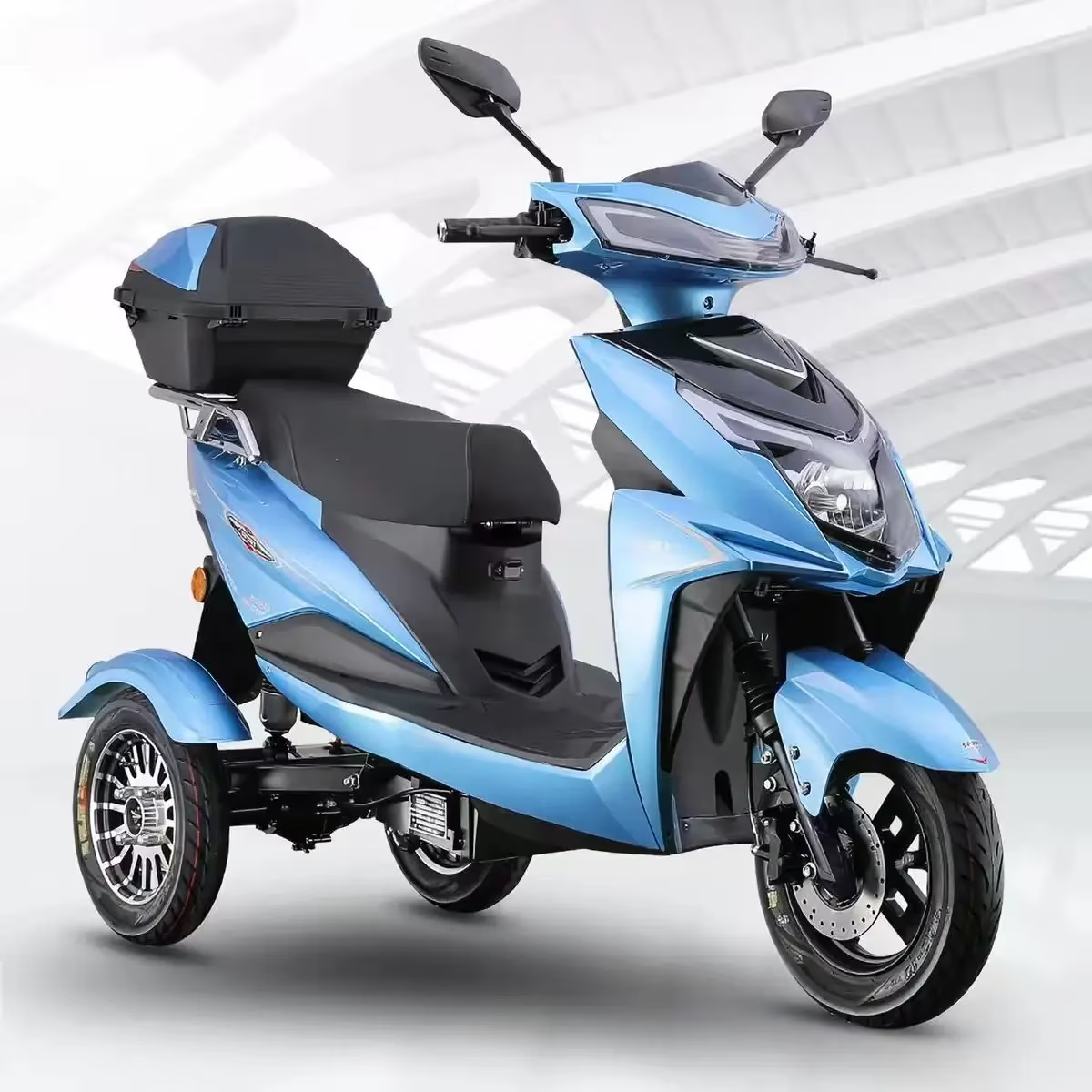
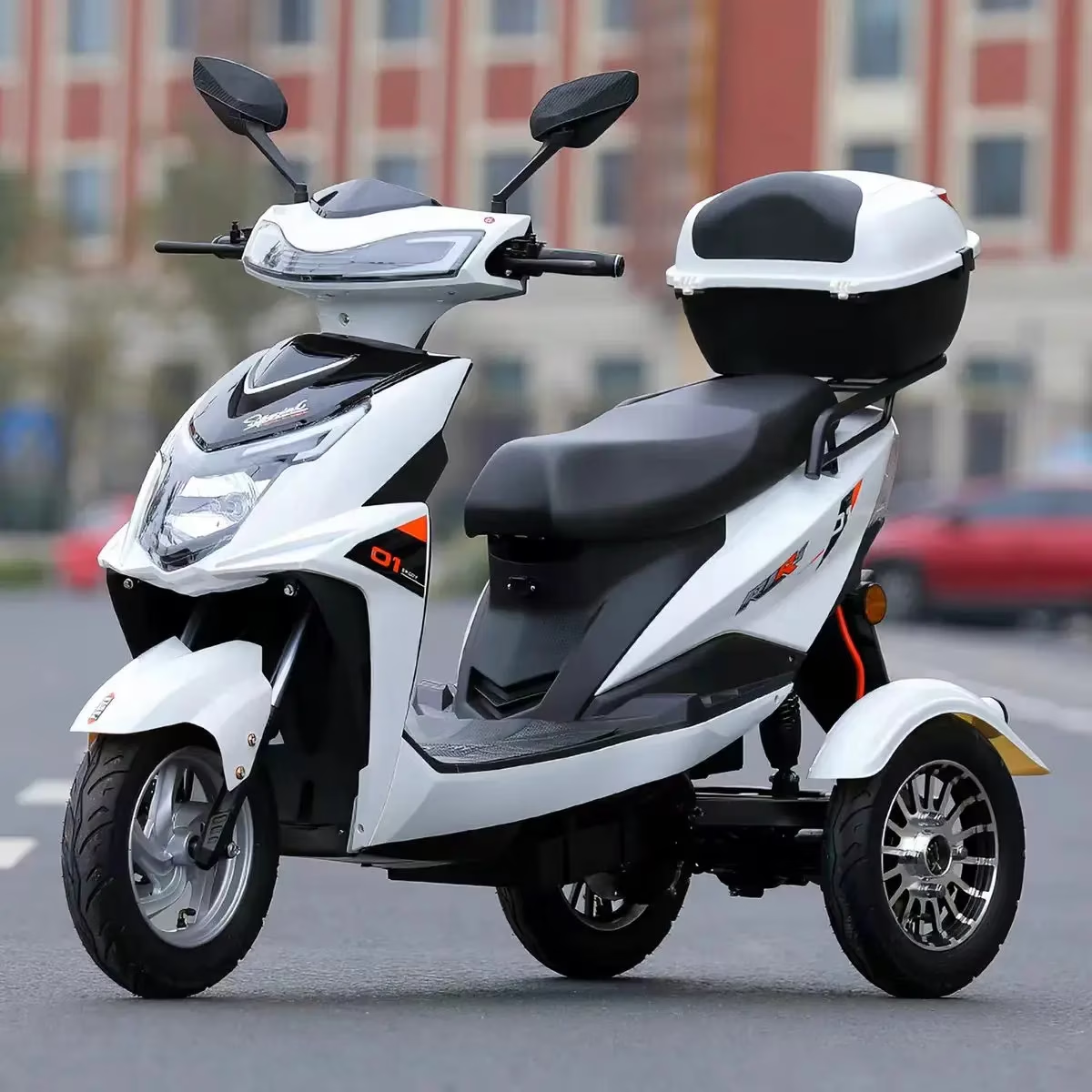
Three wheels with two at the back is a delivery layout, not a leisure one. The single front wheel steers, the rear pair carries the load, and the body stays narrow enough for a lane a van cannot use. This is the shape European and Asian cities settled on for last-mile work long before electric drive arrived.
This model runs a 72V system with a motor above 1000W, a 30–50 km/h top speed, a 200–300 kg payload and a rear top box. Below is what those numbers mean on a working route — and the one figure that decides whether it suits your business at all.
What This Vehicle Actually Is
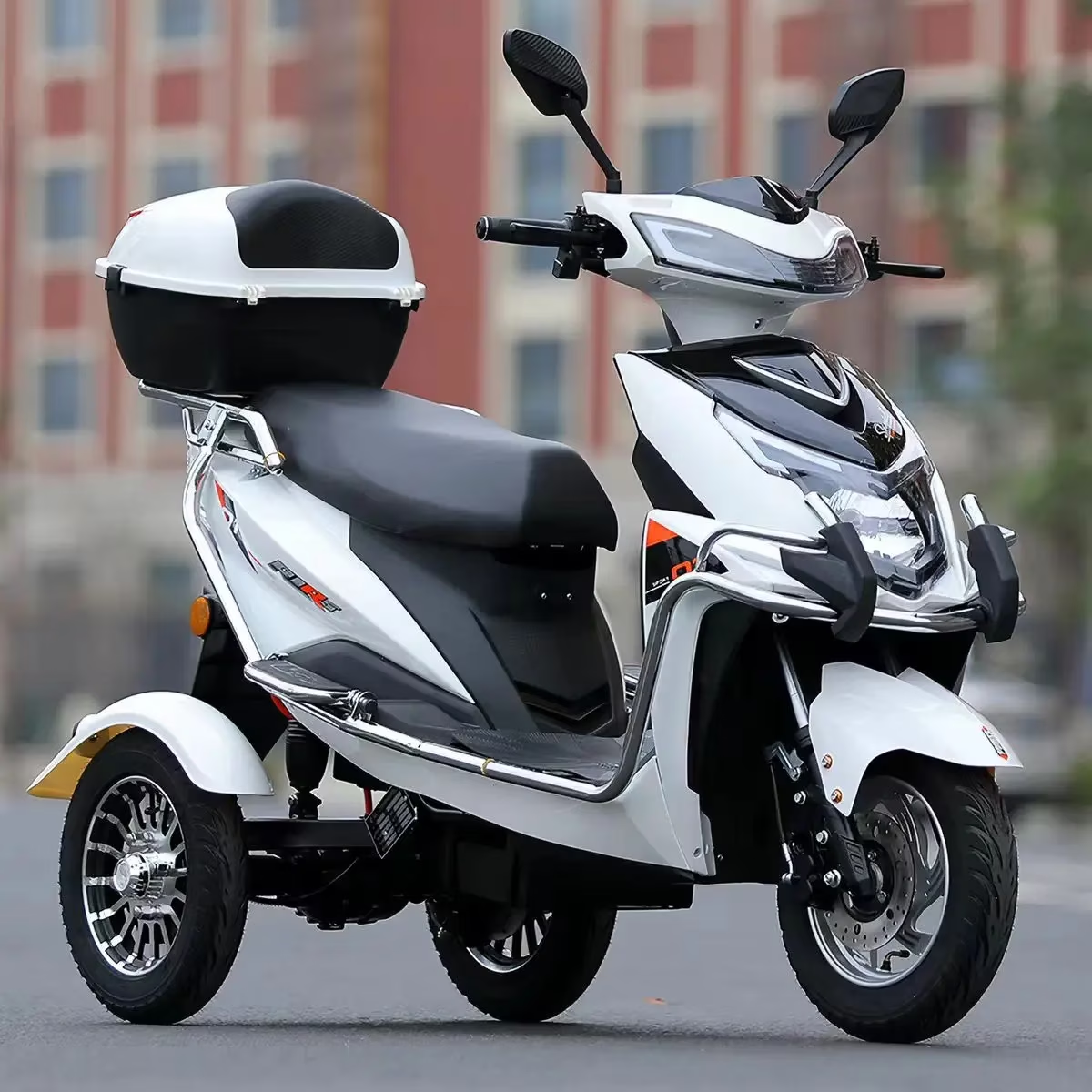
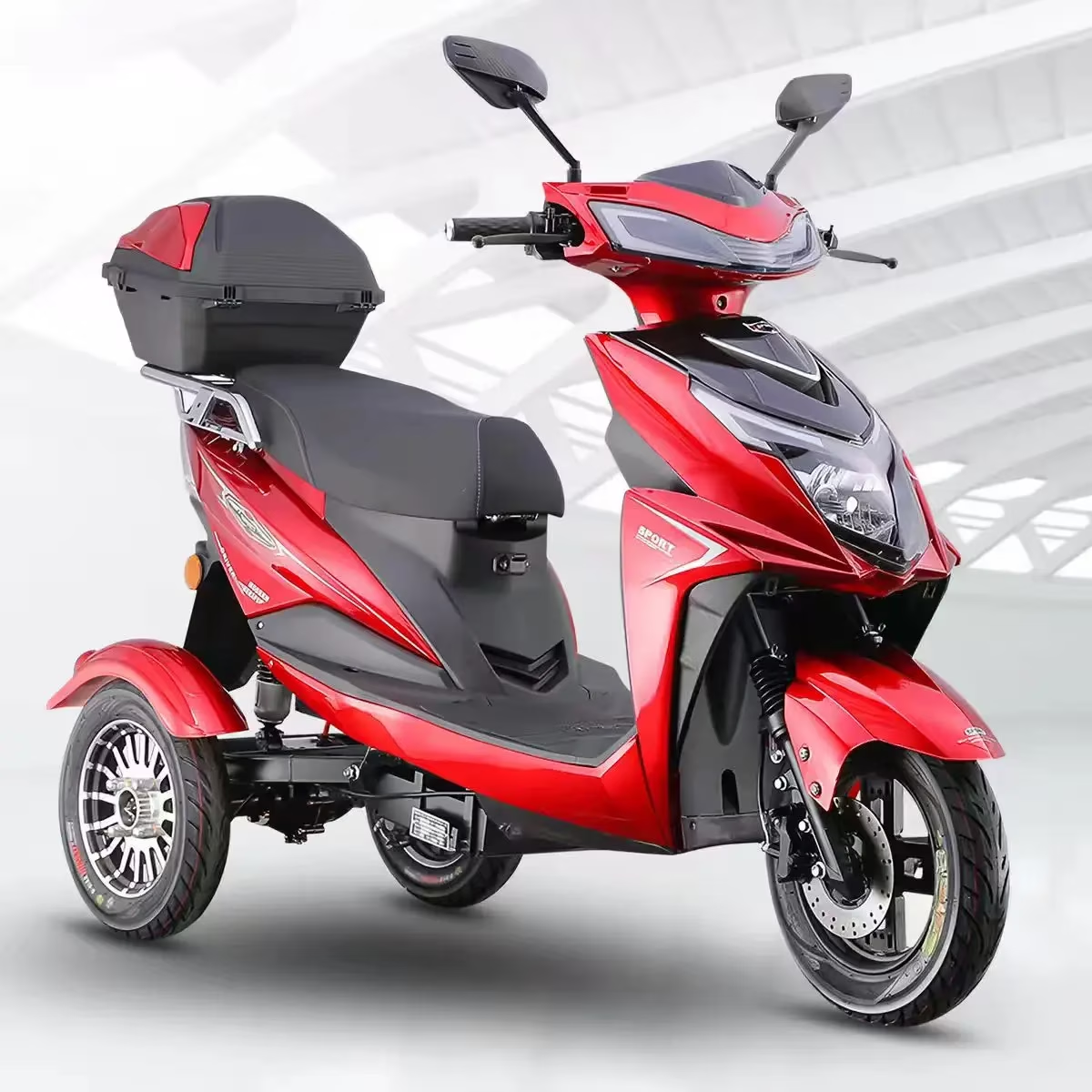
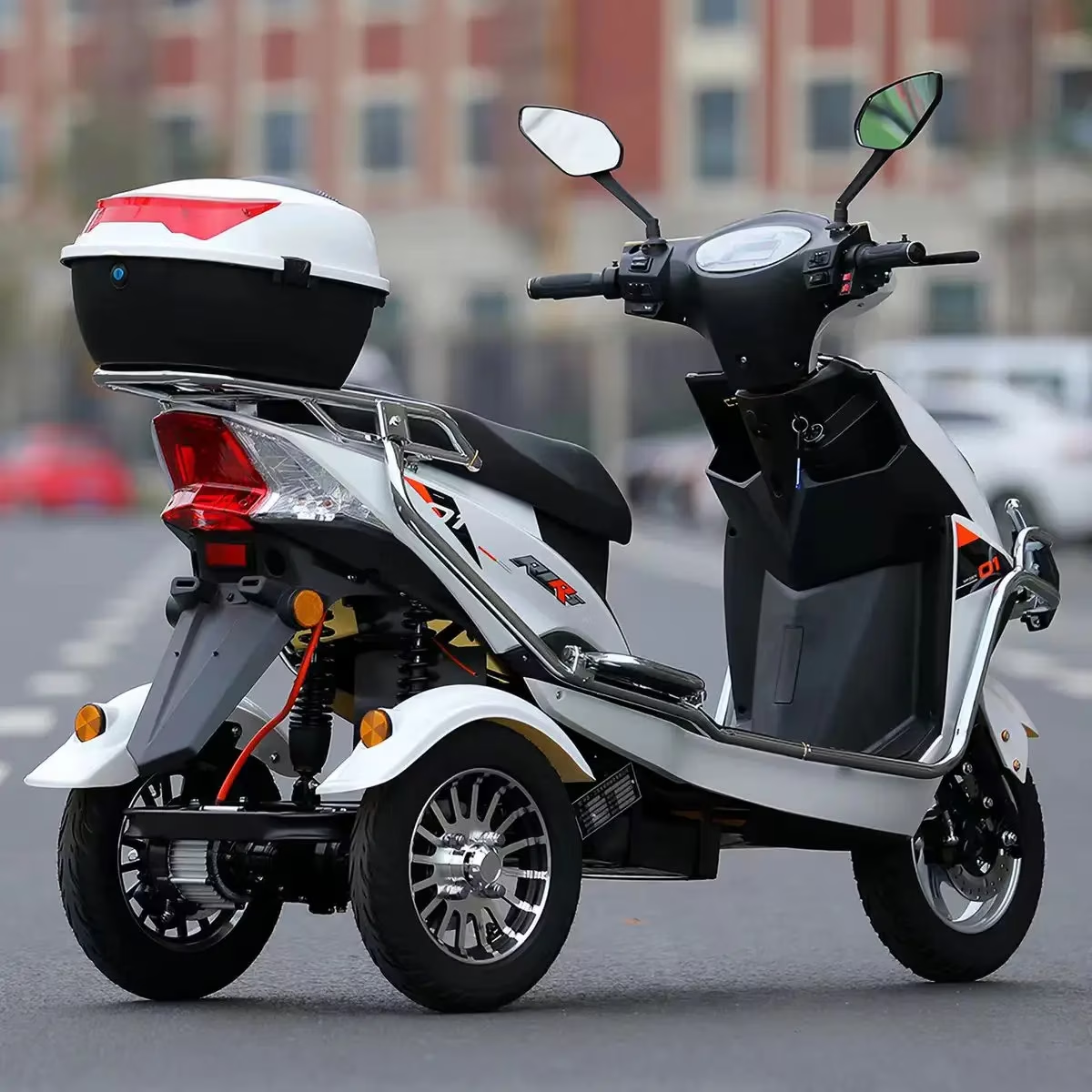
It is a three-wheel electric scooter built for carrying: two wheels at the rear for load stability, a step-through frame for frequent mounting and dismounting, a rear top box for parcels, and a rated payload of 200–300 kg that covers a rider plus a full box.
It is not a recreational vehicle, despite what a generic category label might suggest, and it is not a cargo tricycle with a steel bed. The distinction matters when you compare suppliers:
- Versus a cargo tricycle — this is faster and more manoeuvrable, but carries less volume. A steel-bed trike takes a pallet; this takes parcels.
- Versus a two-wheel delivery scooter — this is more stable when loaded and does not need a foot down at every stop, which matters on wet roads and for less experienced riders.
- Versus an LSV — this is not a road-legal passenger car and does not try to be. It is a working vehicle for a defined route.
Why Two Wheels at the Back
The rear pair is the whole point. With the load carried over two contact patches instead of one, the vehicle stays upright when stationary, does not need a stand, and keeps its line on wet paint or gravel.
Three practical consequences:
- Loading is easier. The rider stays seated while the box is filled, and the vehicle does not tip.
- Braking is more stable. A rear drum on each side gives balanced retardation without the rear stepping out.
- Track width is the constraint. The rear pair is wider than a two-wheeler. Measure the narrowest point on your route — a bollard gap or a shop doorway — before ordering a fleet.
30 km: Built for a Delivery Shift, Not a Commute
The range rating is short, and that is the most important number on this page. A 72V 20Ah lead-acid pack holds roughly 1.4 kWh, which is enough for a compact delivery round and not enough for a long commute.
What 30 km looks like in practice:
- Urban parcel round — 60 to 80 stops inside a 3–4 km radius, roughly three to four hours of work. This is the design case.
- Shop-to-customer deliveries — 15 to 25 drops in a town centre, comfortably inside the figure.
- Commuting — a 15 km each-way trip is at the limit, and cold weather will push it over.
Two things extend the working day: the ≤3 hour charge time, which covers a lunch break, and a second pack if your route runs longer. If your daily distance is above 40 km, this vehicle is the wrong choice — a larger pack or a different platform is the answer, not a bigger box.
1000W and a 10° Limit
The 10° grade rating is modest, and it is honest: a loaded three-wheeler with a narrow track is not a hill climber. That is fine for flat city work and a problem for anything else.
Check two things before ordering:
- Your steepest ramp. A multi-storey car park exit or a bridge approach can exceed 10° when loaded. If your route has one, specify the higher-torque configuration.
- Your surface. The 300-10 tyres suit sealed roads. On cobbles, wet tiles or gravel, traction — not power — decides whether the vehicle gets up.
The 30–50 km/h band is configuration-dependent. In most city delivery use the practical setting is 30–35 km/h: fast enough for traffic flow, slow enough to stop within the sight line.
The Rear Box
The top box is the working space, and its size decides what the vehicle can earn. Ask for the internal volume in litres and the load rating of the box itself — not just the vehicle payload — before committing to a fleet.
Two order-time decisions matter:
- Box type. A rigid top box suits parcels and food; a flat rack suits awkward loads; a insulated box suits cold chain. They are not interchangeable after delivery.
- Access. A top-opening lid is faster at each stop than a side door, but it exposes contents to rain. For food delivery, specify a lid with a seal.
Specification
| Model | Urit 3-wheel electric cargo scooter |
|---|---|
| Seats | 2 (rider + pillion) |
| Wheel layout | 1 front / 2 rear |
| System voltage | 72V |
| Motor | Above 1000W |
| Battery | 72V 20Ah lead-acid (Tianneng / Chaowei) |
| Range per charge | Up to 30 km |
| Max speed | 30–50 km/h depending on configuration |
| Grade ability | Up to 10° |
| Charge time | ≤3 h with supplied charger |
| Brakes | Front disc + rear drum |
| Tyres | 300-10 |
| Payload | 200–300 kg |
| Kerb weight | 200–300 kg |
| Colours | Black, blue, red, white |
| Certification | Ask which documents the factory can supply for your market |
| MOQ / Warranty | 1 unit / 12 months on motor, controller and battery |
Spares, Battery and Import Notes
The consumables on a working three-wheeler, in order: tyres, brake pads, then the box hinges and latches — the parts that fail first on a vehicle that is opened two hundred times a day.
On the battery: a lead-acid pack is cheap to replace and does not like being run flat. Two rules keep it alive — charge after every shift rather than waiting for empty, and never leave it discharged over a weekend. If your route needs more than 30 km, price a lithium option before you buy, not after.
On documentation: this class of three-wheeler is treated differently in almost every market — moped, motorcycle, light goods vehicle, or no category at all. Ask your authority what it requires before the container ships; a supplier cannot answer that for you, and a certificate issued for another model does not transfer.
Frequently Asked Questions
Can it be registered for road use?
That is a question for your authority, not for the factory. In many markets a 30–50 km/h three-wheeler falls into a moped or motorcycle class, which brings registration, a licence category and insurance. In others it is treated as a light goods vehicle. Confirm before importing.
Is 30 km enough for a delivery round?
For a compact urban round of 60–80 stops within a 3–4 km radius, yes — that is the design case. For anything above 40 km a day, specify a larger pack or a different platform.
Can the rear box be changed later?
Mechanically yes, but the mounting points and wiring are set at build. Decide the box type — parcel, rack or insulated — before production, because changing it afterwards costs more than ordering it correctly.
What is the difference from a cargo tricycle?
Volume and speed. A steel-bed cargo trike carries a pallet and is slower; this carries parcels and keeps up with city traffic. If your loads are bulky rather than heavy, the tricycle is the better tool.
Running a mixed fleet? The electric tricycle range covers open-body and enclosed cargo bodies, and the enclosed 400 kg cargo tricycle is the volume alternative to this scooter. Tell us your route, daily distance and box type, and we will quote the pack and loading quantity as one landed cost — send your requirement here.