
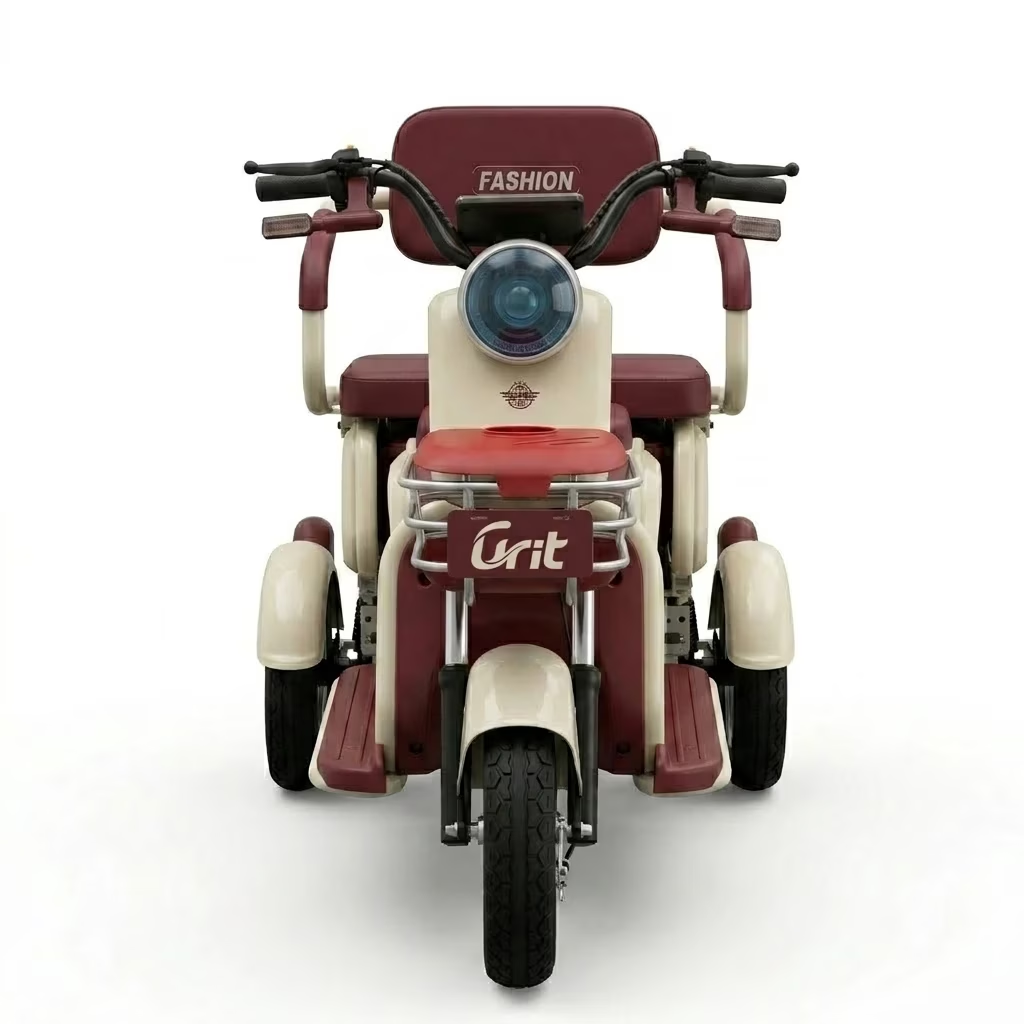
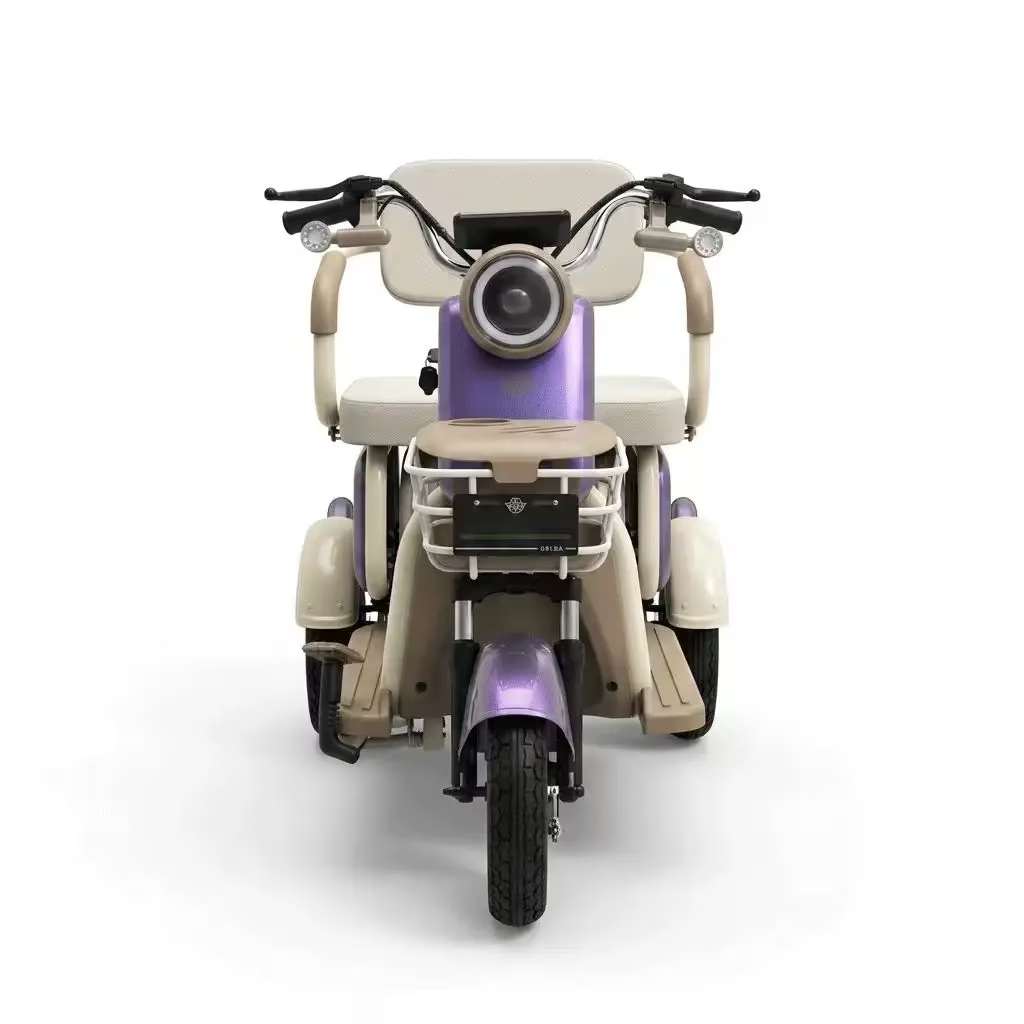
Description
A vintage three-wheel electric trike is bought for two different reasons, and they rarely overlap. One buyer wants a vehicle that looks like nothing else on the market — for a resort, a rental fleet, a boutique hotel, a photo-friendly streetscape. The other wants a stable, low-speed trike for daily errands and does not care what it looks like.
This model serves both: a retro body on a 48V or 60V platform, two seats, a 70–90 km range and a charge time under three hours. Below is what the styling costs you, what it does not, and where this trike stops being the right purchase.
What “Vintage” Means Here — and What It Does Not
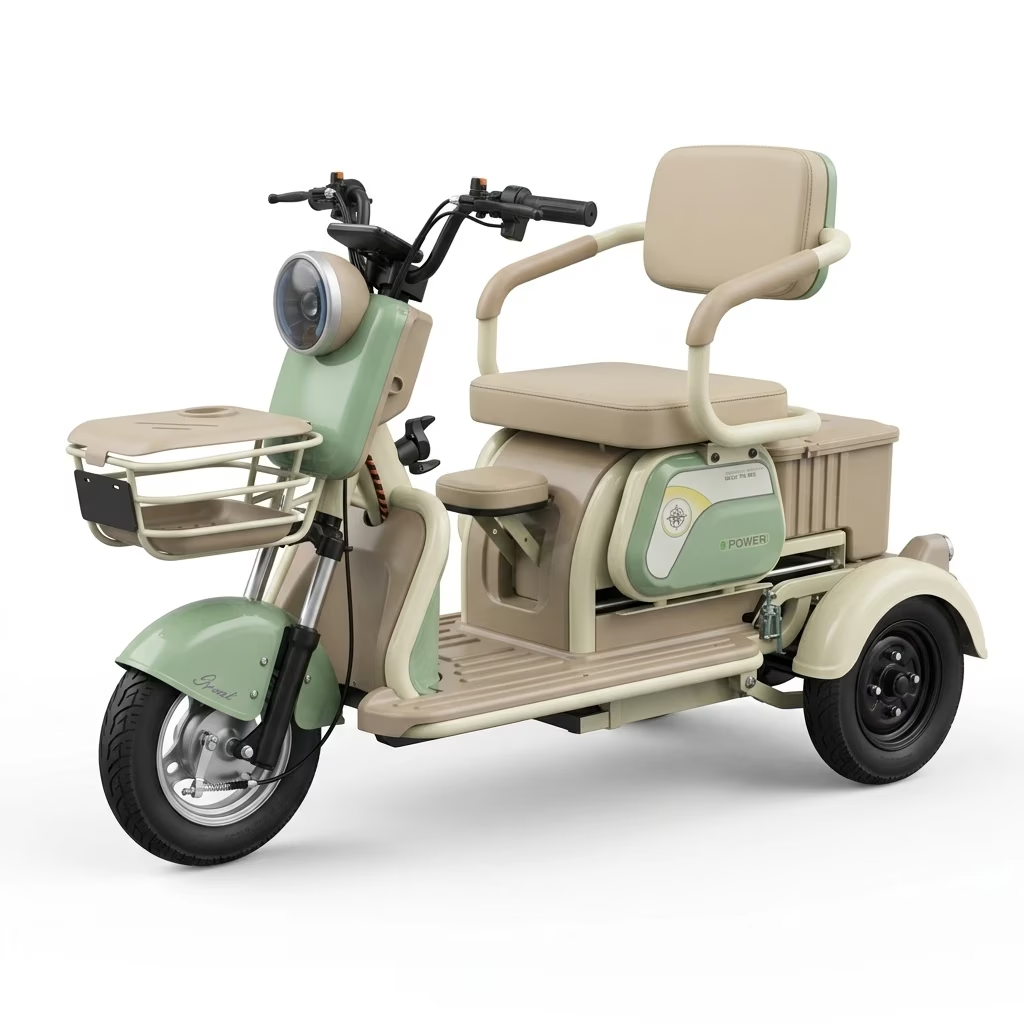
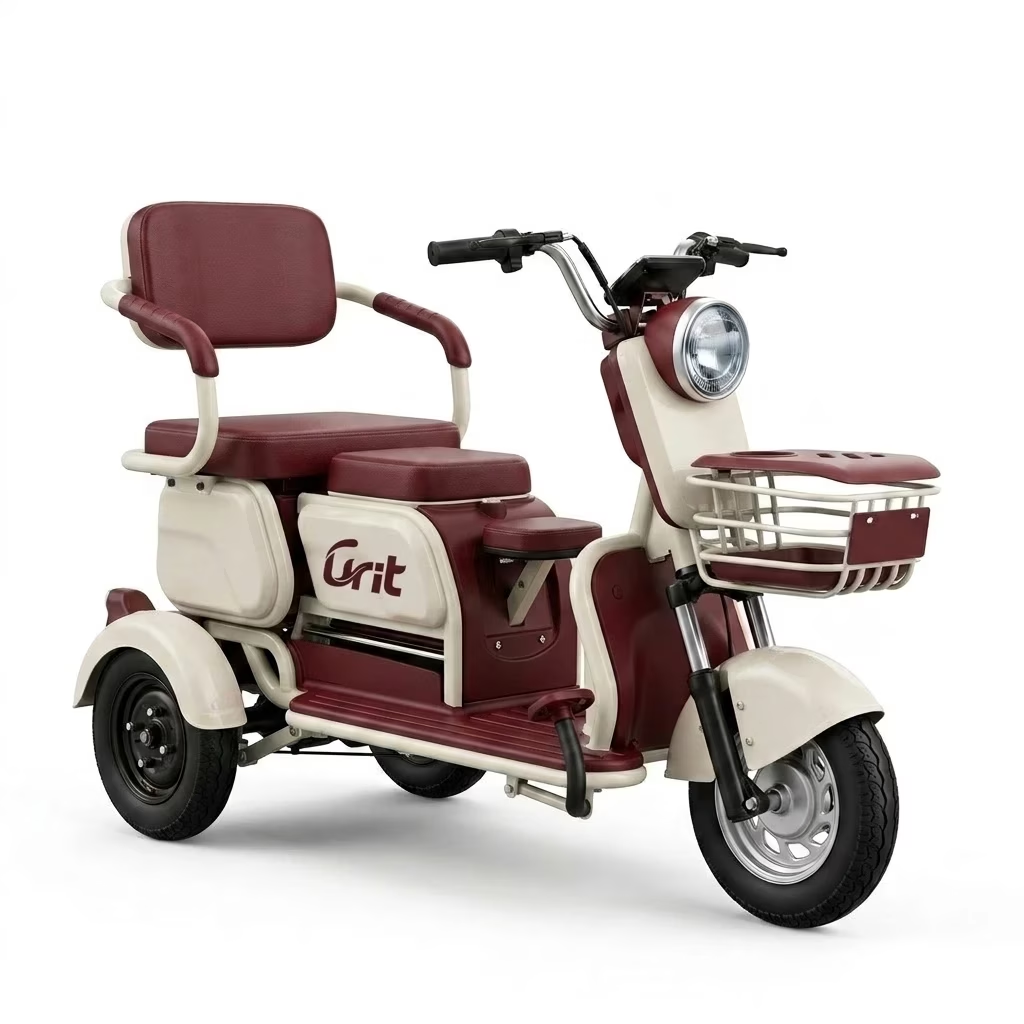
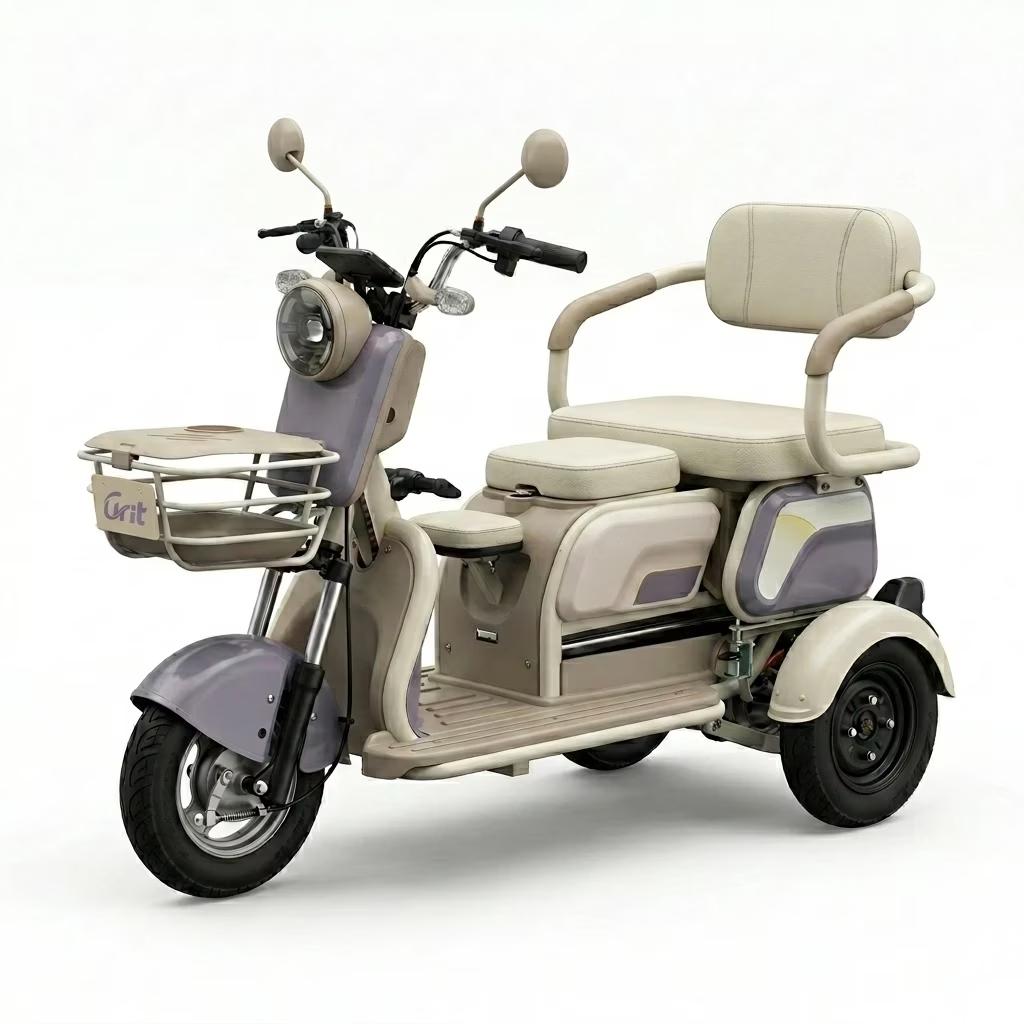
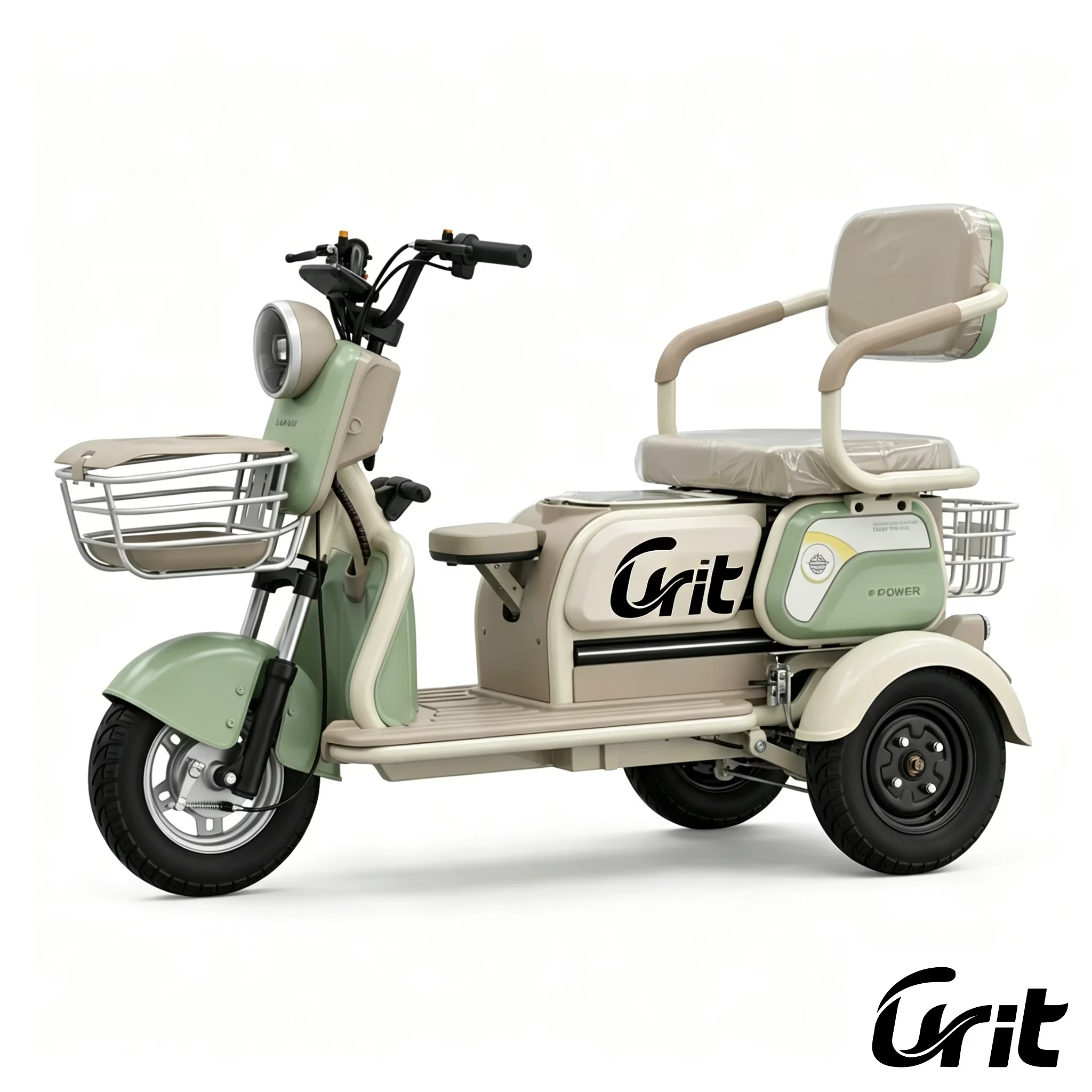
The retro styling is bodywork and trim: round headlamp, chrome-look basket, bench seats with piping, a colour palette that reads 1970s rather than 2020s. Underneath it is a standard small EV drivetrain.
That distinction matters commercially. Vintage styling does not mean:
- Vintage performance. The 501–800W motor and 30 km/h ceiling are modern low-speed EV figures, not a restored scooter’s.
- Vintage maintenance. There is no carburettor, no points, no oil. Service is brake shoes, tyres, and the pack.
- Vintage parts availability. The body panels are specific to this model. Order a spare set with the container — this is the one genuine downside of a distinctive body.
Two Seats, Under 100 kg, and Who It Fits
The kerb weight is under 100 kg and the payload is 100–200 kg, which tells you what the vehicle is for: one or two people, short trips, no freight.
It suits four buyers:
- Resorts and boutique hotels — a guest vehicle that photographs well and moves two people quietly.
- Scenic sites and promenades — low speed suits pedestrian zones, and the styling fits a heritage setting better than a white utility cart.
- Rental operators — a distinctive unit that rents on appearance, not specification.
- Private buyers — a second vehicle for short errands in a town where parking is the real constraint.
It does not suit cargo work, hills above 25°, or any route where 30 km/h holds up traffic.
70–90 km on a 20Ah Pack
The range comes from a 48V 20Ah or 60V 20Ah lead-acid pack — the standard fitment in this class, and the reason the price sits where it does. Lithium is available and changes the arithmetic on weight and charging, not on top speed.
Three notes on the range figure:
- It assumes one rider. Two adults on a 100 kg trike is a 60–70% load increase; expect the low end of the band.
- It assumes a new pack. A lead-acid pack loses capacity from the first season, and noticeably by the third.
- It assumes moderate temperature. Cold mornings cut usable capacity; the pack recovers as it warms.
For a resort loop of two to three kilometres, the range is irrelevant — the trike will run all day and charge overnight. For a 30 km daily commute, it is the binding constraint.
Under Three Hours to Charge: The Practical Difference
A charge time of three hours or less is unusual in this class, where lead-acid packs often need seven to nine. It changes how a fleet is run:
- Two shifts become possible. A lunchtime charge covers an afternoon session without a second vehicle.
- Rental turnover improves. A unit returned at noon can go out again at four.
- Site power matters less. A shorter charge window means a smaller generator can cover a small fleet.
Confirm the charger voltage before production: 110V and 220–240V markets need different units, and a fast charger on the wrong supply is a warranty claim waiting to happen.
Climbing 25° on a Light Chassis
A ≥25° rating on a sub-100 kg vehicle with a 501–800W motor is credible for short ramps — a driveway, a site entrance, a bridge approach. It is not a sustained-gradient figure.
Two things matter on real routes:
- Load. Two adults on a 25° ramp is close to the limit; the motor will hold but speed drops sharply.
- Surface. The 300-8 tyres are narrow and suited to paved and packed surfaces. On wet grass or gravel, traction limits the climb before power does.
Specification
| Model | Urit vintage 3-wheel electric trike, two seats |
|---|---|
| Seats | 2 (driver + 1 passenger, in line) |
| Body style | Retro open body, front carrier basket, no canopy |
| System voltage | 48V or 60V, depending on configuration |
| Motor | 501–800W |
| Battery | 48V 20Ah or 60V 20Ah lead-acid (Tianneng / Chaowei); lithium optional |
| Range per charge | 70–90 km (test condition, one rider) |
| Max speed | ≤30 km/h |
| Grade ability | ≥25° |
| Charge time | ≤3 h with supplied charger |
| Brakes | Front drum + rear drum |
| Tyres | 300-8 |
| Payload | 100–200 kg |
| Kerb weight | ≤100 kg |
| Overall dimensions | Approx. 1600 × 720 × 1020 mm |
| Colours | Green, purple, red |
| Certification | CE — confirm which model and battery configuration the document covers |
| MOQ / Warranty | 1 unit / 12 months on motor, controller and battery |
Where a Retro Trike Actually Sells
This is not a commodity vehicle, and it should not be marketed as one. The buyers who pay a premium for it are buying appearance, and the sales channels reflect that:
- Hospitality — hotels and resorts that want a guest vehicle matching their interior design, not a white utility cart.
- Heritage and scenic sites — old towns, promenades, waterfronts where a modern cart looks out of place.
- Rental and experience businesses — a vehicle that photographs well is a vehicle that rents.
- Lifestyle retail — in markets where a retro e-trike is sold as a personal accessory rather than transport.
If your market is price-driven and utility-focused, a standard open cargo trike will outsell this every time — and cost you less in body spares.
Frequently Asked Questions
Is the 25° climb figure realistic with two people aboard?
For a short ramp, yes. For a sustained gradient, plan on 15–20° with two adults. The rating is a maximum, not a cruising figure.
Can it be used on public roads?
That depends on your market and how a 30 km/h three-wheeler is classified there. Some countries treat it as a moped class, others as a light vehicle, and some have no category. Confirm with your authority before importing.
Lead-acid or lithium?
Lead-acid keeps the unit price down and is fine for one charge a day. Lithium cuts 15–20 kg, tolerates partial charging and lasts more cycles — worth it for rental fleets, hard to justify for a hotel that runs one shift.
Are body panels available as spares?
Yes, but they are model-specific and not interchangeable with a standard trike. Order a spare set of the panels most exposed in your use — front cowl and rear fender — in the same container.
Comparing retro bodies? The premium vintage leisure vehicle is the larger, higher-power version of the same idea, and the electric leisure vehicle range covers both. Tell us your site, daily route and destination port, and we will quote the pack option, spare panels and loading quantity as one landed cost — send your requirement here.