
You are an importer, wholesaler or fleet operator choosing a voltage platform for an electric bike range. The decision fixes the markets you can serve, the paperwork you inherit and the battery cost inside every unit. It is close to irreversible once the first container specification is signed and the deposit is paid.
This article compares 48V and 72V builds on three things: what sets real speed, what the battery costs at equal capacity, and what changes at the port. You get one arithmetic table, one decision table and the questions to put on your quotation.
Scope first: this page covers voltage selection only, and private-label configuration sits outside it. No vehicle described here is offered as road-legal. Registration is a market-by-market determination.
Voltage Is a System Choice, Not a Power Rating
A voltage label is not a speed rating. Top speed comes from three parts working together: pack voltage, motor power and the current limit set in the controller.
Raising voltage lets a motor turn faster at the same current. The controller still caps that current, and the motor still has a thermal ceiling.
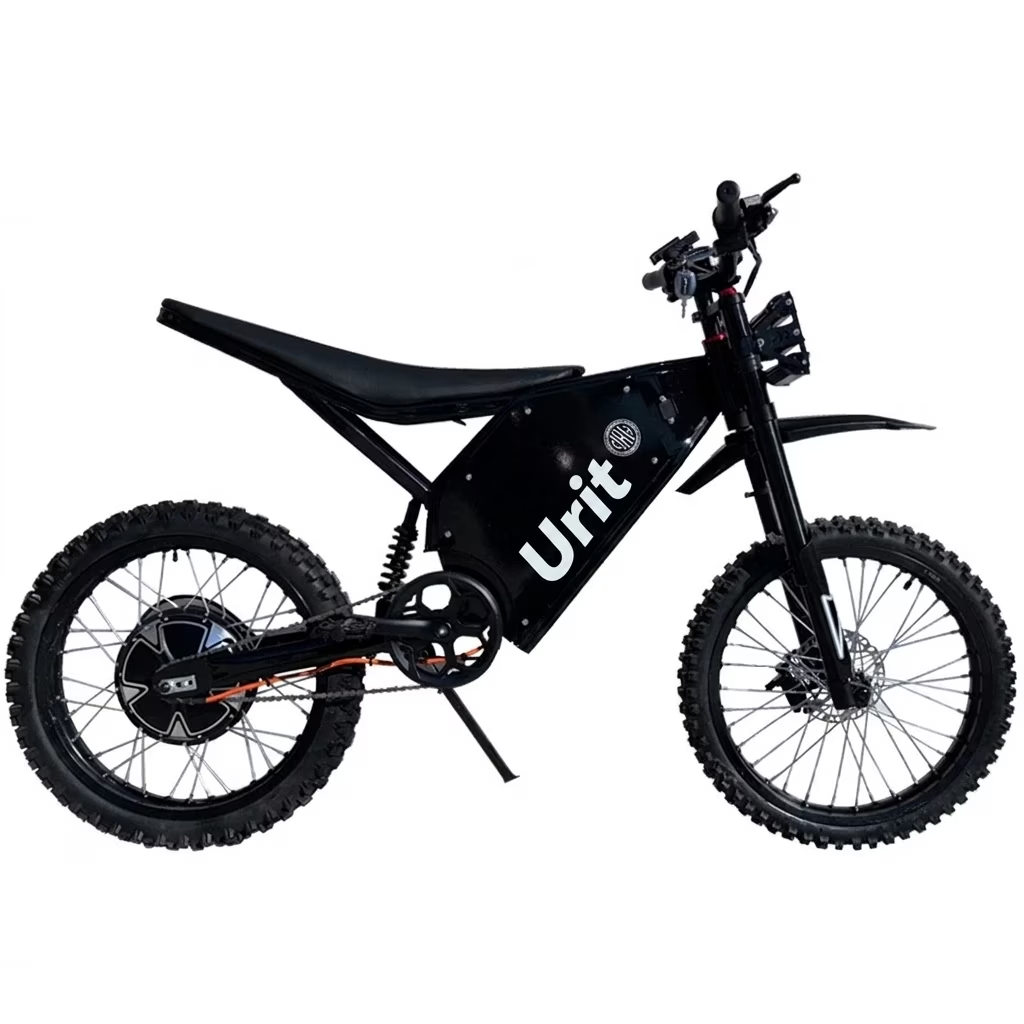
Our 72V electric bike with a 61–80 km/h top speed pairs a 3,000 W motor with a 72V pack. The pair produces that figure, and the pack alone does not.
A 48V platform of 1,000 W reaches about 40 km/h. Triple the motor power and add 50% more voltage, and the speed gain stays well short of triple.
Read the three parts as a chain. The weakest link sets the outcome, and it is often the controller’s current limit or motor heat rather than the pack. Ask for all three numbers, because the same motor can be tuned fast or slow by the controller map alone.
What 48V Buys You in a Regulated Market
In regulated markets the assisted-speed ceiling is set by law rather than by the motor, and a 48V platform is built to sit inside it.
- EU: pedelec assistance stops at 25 km/h with a 250 W continuous rating.
- US: Class 1 and Class 2 cap at 20 mph (about 32 km/h); Class 3 allows 28 mph (about 45 km/h), with state rules on top.
- Off-road: no road class applies on private land, so the vehicle sells as a leisure machine.
Where the ceiling sits at 25 km/h, a 48V build reaches it with margin and spends the rest of the pack on range. Extra voltage buys speed you cannot use on that road.
Regulation is set by your national authority, not by us. Confirm the classification and documentation your market requires before you place a deposit.
Where 72V Sits — and Why It Changes the Paperwork
Above the assisted-speed ceiling, a bike stops counting as a bicycle. Most regulators move it into a moped, motorcycle or L-category class instead.
That reclassification shifts the work onto the importer. Type approval, a registration plate, a rider licence and insurance may each apply before the first sale.
Complaints on a 72V order often start when the buyer learns about the plate and licence after the container lands. Returns at that stage are expensive to reverse.
Voltage alone does not reclassify a vehicle. The usual test is top speed, continuous power and mass, measured against your national rules.
The after-sales picture changes too: a 72V build packs more cells, a larger battery management system and a higher-rated controller into the same frame envelope.
So ask which spare controllers and looms the quotation includes, and price them into the landed cost before you commit.
Deposit sequencing, documents and container release run in the same order across our electric range. Our guide to how to import electric tricycles from China walks that sequence through.
Regulation is set by your national authority, not by us. Confirm the classification and documentation your market requires before you place a deposit.
Pack Energy: The Arithmetic That Decides Real Range
Watt-hours are voltage multiplied by amp-hours. That one line explains most of the price gap between a 48V and a 72V quotation.
| Platform | Equal-capacity pack | Energy |
|---|---|---|
| 48V | 48 V × 20 Ah | 960 Wh |
| 72V | 72 V × 20 Ah | 1,440 Wh |
Same amp-hour label, 50% more energy at 72V — arithmetic, not a measured range.
A pack builds its energy from cells in series and parallel: series count sets voltage, parallel count sets capacity.
Reaching 72V needs more cells in series than 48V at the same capacity. More cells mean more interconnects, a longer series string and a larger battery management system.
That is why a 72V quotation is higher when the amp-hour figure reads the same: cell count, BMS channels and assembly time all rise together.
Range still follows terrain, load and assist level. We publish no measured range figure, so the quotation confirms the exact specification shipped.
Controller, Motor and Heat: Matching All Three
The controller turns a voltage decision into a cost decision: it must be rated for the pack voltage and for the current the motor will draw.
At equal motor power, a 48V build draws 1.5 times the current of a 72V build — 72 divided by 48, arithmetic. Higher current needs thicker cable, larger connectors and more heat sinking.
Heat is the limit buyers underestimate, and a controller rated for peak current still derates inside a closed compartment on a long climb.
| Item | Detail |
|---|---|
| Current at equal motor power, 48V versus 72V | 1.5 times (arithmetic) |
| Full recharge on the supplied charger | 5–7 h (class typical) |
| Cells in series | Fewer at 48V, more at 72V |
| Cell type and capacity | Confirmed on the quotation |
Rows marked “class typical” describe this vehicle class rather than a fixed figure for every configuration. The quotation confirms the exact specification shipped.
Settle three numbers in writing before the deposit: pack voltage, motor continuous rating and controller current limit. Ask for the cable gauge alongside them.
Which Voltage for Your Market
Start from the market and work back to the platform, because the question is not which voltage is higher but which one your regulator allows.
| Market position | Platform | Reason |
|---|---|---|
| Regulated pedelec market, 25 km/h ceiling | 48V | The ceiling caps what the pack can deliver |
| Class-based market, mixed local access | 48V or 72V by class | The class sets equipment and rider rules |
| Private land, no registration path | 72V | Speed and terrain are the product |
| Two segments in one order | Both, split by carton count | One container can serve both shelves |
Regulation is set by your national authority, not by us. Confirm the classification and documentation your market requires before you place a deposit.
Mixing 48V and 72V in One Container
The two platforms rarely share a carton size. A full-size off-road build occupies more volume than a foldable fat-tyre electric bike, so the split changes units per container.
Lithium packs usually travel under UN38.3 test documentation and an MSDS, so request both for each pack variant in the same booking, not after it.
Then ask for the loading plan: carton dimensions, stack height and where the pack cartons sit. Load heavy cartons over the axle and keep packs out of the crush zone. Confirm the split in cartons rather than units, because the two carton sizes rarely convert one to one.
Voltage is a system choice that follows the market you sell into. Fix the assisted-speed ceiling first, choose the platform second, and check the pack arithmetic against your own range requirement third.
Send us your target market, the assisted-speed ceiling that applies there and the units you plan per container. We will return a voltage recommendation, the pack arithmetic for both platforms and a carton plan for a mixed load.
Questions Buyers Ask
Does a 72V bike go twice as fast as a 48V one?
No. Speed follows pack voltage, motor power and controller current limit together, and voltage on its own sets no speed.
Can I register a 72V bike as a bicycle in my market?
That depends on your market. The usual test is top speed, continuous power and mass, and your national authority answers it rather than the voltage label.
Why is the 72V quotation higher at the same amp-hour rating?
A 72V pack holds more cells in series for the same capacity. Cell count, BMS channels and assembly time all rise, and the controller is rated higher.