
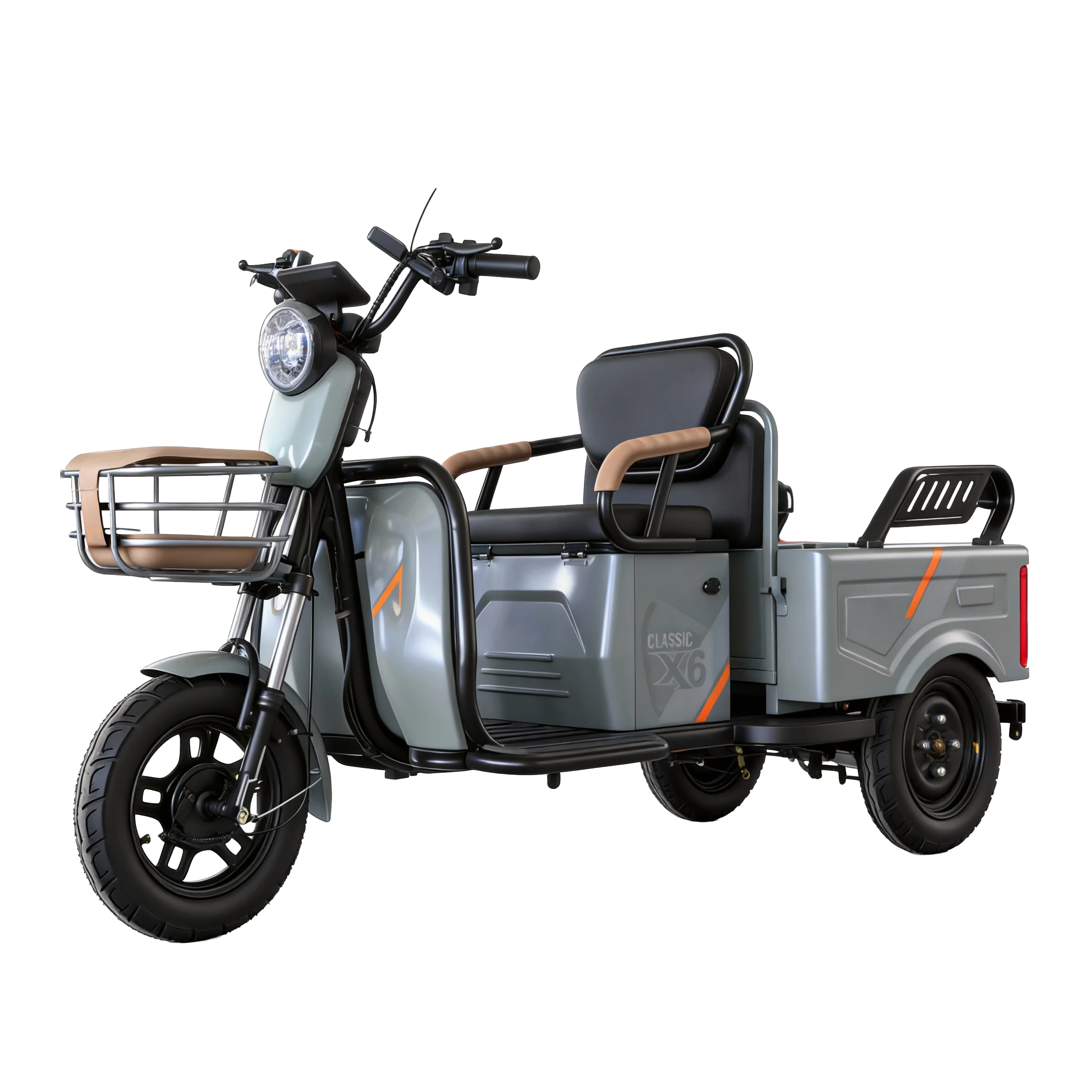
You are an importer, wholesaler or fleet operator about to place a deposit on electric tricycles. The decision is not which model to buy, but whether the paperwork will clear your port. What follows is one document list, one verification routine, and two tables: what a certificate covers, and what each market asks for.
Our guide to how to import electric tricycles from China covers the process end to end; this page stays on certificates. Nothing here states that any vehicle is approved for your market, because approval is not a claim a supplier can make on your behalf.
Regulation is set by your national authority, not by us. Confirm the classification and documentation your market requires before you place a deposit.
CE and EEC Are Not the Same Document
Electric tricycle certification usually arrives as two letters, and buyers treat them as interchangeable. They are not, and the difference decides which document a customs officer will accept.
CE is a marking a manufacturer applies after assessing a product against the EU legislation covering it. Behind the mark sit a technical file and a signed declaration of conformity.
EEC is a name that outlived its organisation: the European Economic Community became the European Union, and suppliers still print the letters to mean European type approval.
What buyers usually mean by EEC is European vehicle type approval. An authority approves a vehicle class, and the manufacturer then issues a certificate of conformity for each unit built to it.
One is a declaration about a product; the other is an approval of a vehicle type. A tricycle can hold the first and still fail on the second.
What a CE Mark Covers — and What It Does Not
A CE mark attaches to an object, not to a container. Three objects travel in one shipment, and each needs its own evidence.
| Object | What its document covers | What it does not cover |
|---|---|---|
| Complete vehicle | Product safety and electromagnetic behaviour of the build | Type approval, or registration in your market |
| Component: lamp, charger, horn, mirror | That component only, against the rules for that component | Anything about the assembled tricycle |
| Battery pack | Transport testing (UN38.3) and chemical hazard data (MSDS) | The vehicle, its wiring, or the charger supplied with it |
A CE mark on a charger covers the charger, not the vehicle it is plugged into.
Read any supplier catalogue this way, ours included: some listings carry CE, others EEC, others ISO, and those are three different scopes.
A listing states what the seller claims, not what an authority has decided. Take the enclosed six-seat electric tuk tuk, whose page quotes six seats and 30–50 km/h. Speed, continuous power and unladen mass decide its class, and that answer belongs to your authority.
EEC and Type Approval: Why the Certificate of Conformity Decides the Port
Type approval is granted to a holder, and that fact decides what happens at the port. Most buyers never ask who holds it.
Who holds the certificate — the factory or you
If the factory holds the approval, the certificate is issued in the factory’s name. You import a vehicle already covered, and your duty is to keep it unmodified until registration.
If you apply as the importer, the approval carries your name instead. Conformity of production, labelling and product liability then sit with your company.
A certificate held by another importer in your market does not transfer with the container. Labelling follows the same logic, since some authorities want the importer’s name on the plate.
Three changes that put a certificate out of scope
Approval covers a specification, not a model name. Three edits fall outside the approved build: continuous motor power, battery capacity or chemistry, and governed top speed.
A larger pack, a hotter controller setting or a raised speed limit can each require a fresh test the quotation may not mention.
Settle those three numbers before the certificate conversation starts. Weeks from deposit to a test report are confirmed on the quotation for your model and market, and any mid-order change adds a second cycle to the schedule.
The Import File: Six Documents to Request Before Deposit
Six documents do most of the work at the port, and this is where electric tricycle certification holds up or falls apart. Ask for all six as PDFs you can forward unedited.
- Declaration of conformity — signed by the manufacturer, naming the rules applied and product covered.
- Test report — from the laboratory that ran the tests, showing which parameters it measured.
- Certificate of conformity — carrying the reference, the VIN and the data of the approved type.
- VIN and plate record — the number stamped on the frame, matching invoice and certificate.
- HS code and goods description — agreed with your broker before the invoice is issued.
- Packing list — units, spare parts and packs with serials, matching the loading photos.
For a lithium pack, add the UN38.3 test summary and a current MSDS. A forwarder who asks for both will check them.
| Market | Usually required to clear (confirm with your broker) | Commonly requested on top |
|---|---|---|
| EU | Certificate of conformity for the approved class, plate matching the VIN | Technical file extract, battery transport file |
| UK | Documents for the UK approval route, plate and VIN record | An EU approval as supporting evidence only |
| Gulf states | Consignment-level certificate of conformity from an accredited body | Arabic labelling, test report |
| Sub-Saharan Africa | Pre-shipment conformity inspection where a national programme applies | Test report, certificate in the importer’s name |
| Latin America | National approval or registration document | Spanish or Portuguese labelling |
| South-East Asia | Import permit plus national type approval where required | Test report, local agent details |
Read that table as questions for your broker, not as their answer. Regulation is set by your national authority, not by us. Confirm the classification and documentation your market requires before you place a deposit.
How to Verify a Certificate You Have Been Handed
Verification takes about twenty minutes, and it belongs before the deposit leaves, not after the container is booked.
- Read the object, not the logo — is this a vehicle approval, a component declaration, or a transport test summary?
- Name the holder — a factory, a trading company or another importer, each with different consequences.
- Match the parameters — speed, continuous power and mass should match the plate on your unit.
- Call the issuing body on a number you found yourself, and quote the reference. Never use the number printed in the covering email.
- Check the date and the model list — an expired document, or one naming another variant, is a no.
- Ask for the certificate issued against your VIN, rather than a specimen from a previous order.
Take the U3 400 kg electric cargo tricycle, whose page mentions 3C safety standards. 3C is China’s compulsory scheme for domestic sale, so even a genuine 3C marking describes the Chinese market, not your import file.
Four red flags in a supplier’s certification claim
- The holder’s name is blurred, cropped or absent from the copy you were sent.
- One document is said to cover the whole range, when approval is granted per type or variant.
- A component certificate is presented as a vehicle approval.
- The issuing body cannot be found, or the validity date has passed.
Why Shipments Are Stopped at the Port, in Priority Order
Treat this as the working order rather than a survey, and check the first before the container leaves the factory.
- Plate and documents disagree — the VIN, model code or rated power on the frame differs from the certificate or the invoice.
- The battery file is missing or generic — no UN38.3 summary, or an MSDS for a different chemistry.
- Quoted speed or power sits outside the documented class — a unit faster than its paperwork invites a second inspection.
The photo set to take before the doors close
- The plate, with the VIN legible and the matching invoice line in frame.
- The battery pack and its label, showing chemistry and capacity.
- The charger label, showing input and output ratings.
- The certificate page against the same vehicle’s plate, tying the document to that unit.
- The container number and seal, then the last unit before the doors shut.
These are not marketing photos but the evidence you forward when a question lands later.
Certificates cost little to check and a lot to assume. Fix the three numbers that decide the class, request the six documents in writing, and check the holder before the deposit moves.
Send us the model, your port of entry and the class your authority has confirmed. We will return the document list for that build, with each item marked as shipped with the container or issued by your authority.
Questions Buyers Ask
Does a CE mark get my tricycle registered?
Not on its own. CE addresses product legislation, while registration is decided by your transport authority against a vehicle class. Ask that authority, in writing, which class and which document it accepts.
Is an EEC certificate the same as EU type approval?
Treat the name as shorthand and read the document itself instead. What matters is the class it approves, the holder named on it, and whether the parameters match the unit in your order.
The supplier says one certificate covers every model. Is that plausible?
Rarely. Approval is granted to a type or a variant, and a different motor rating, pack or governed speed usually falls outside it. Ask for the model list attached to the certificate, then check your model against that list.