

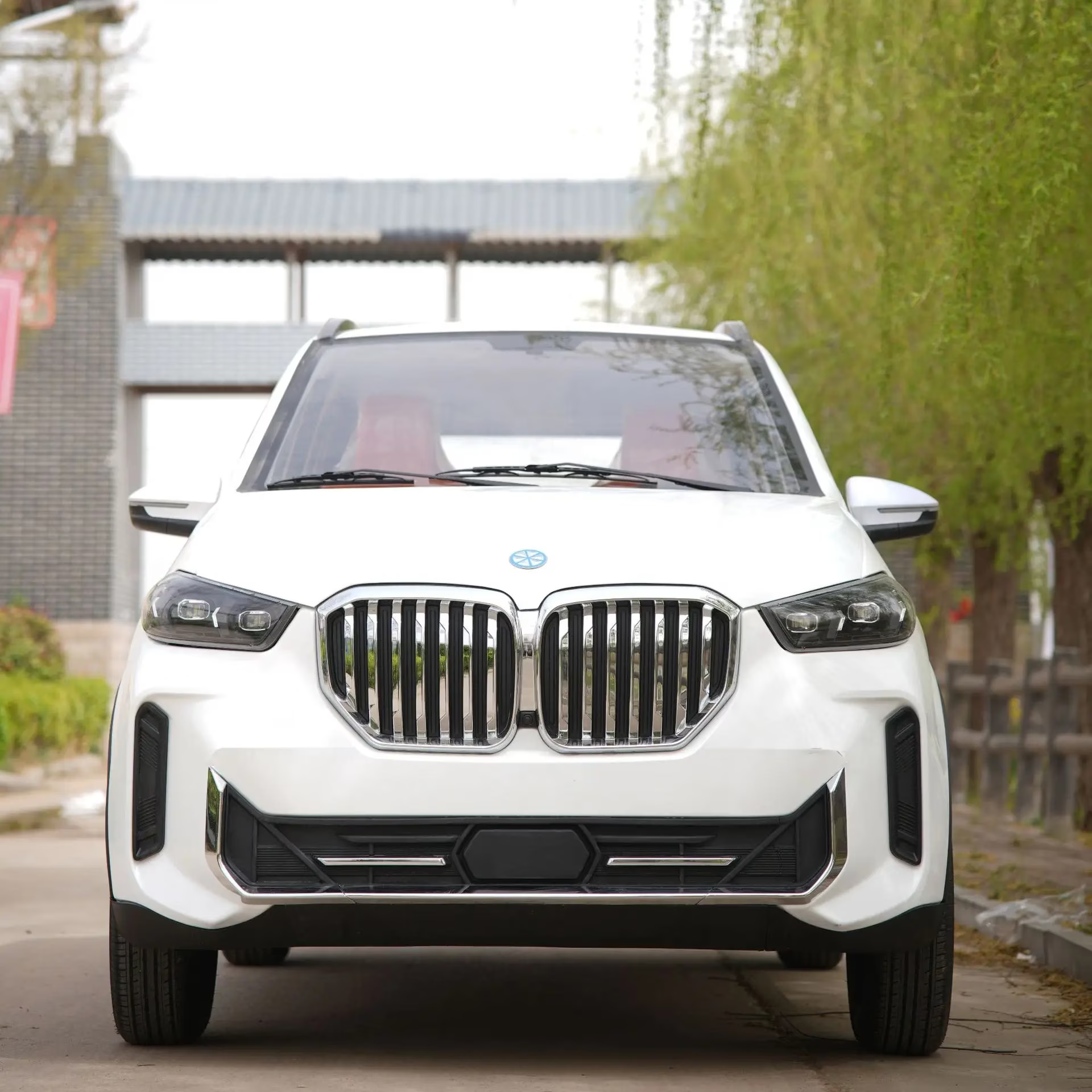
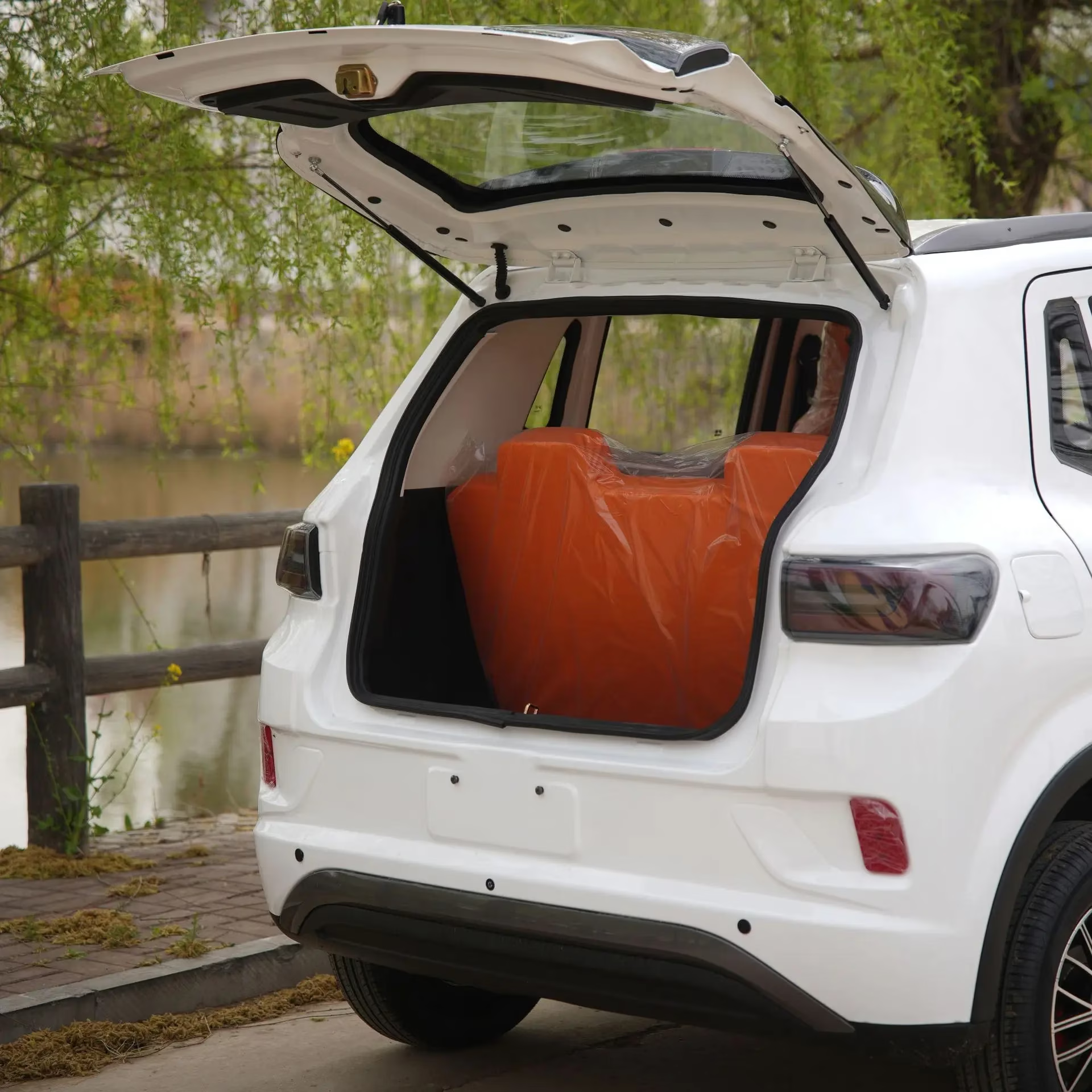
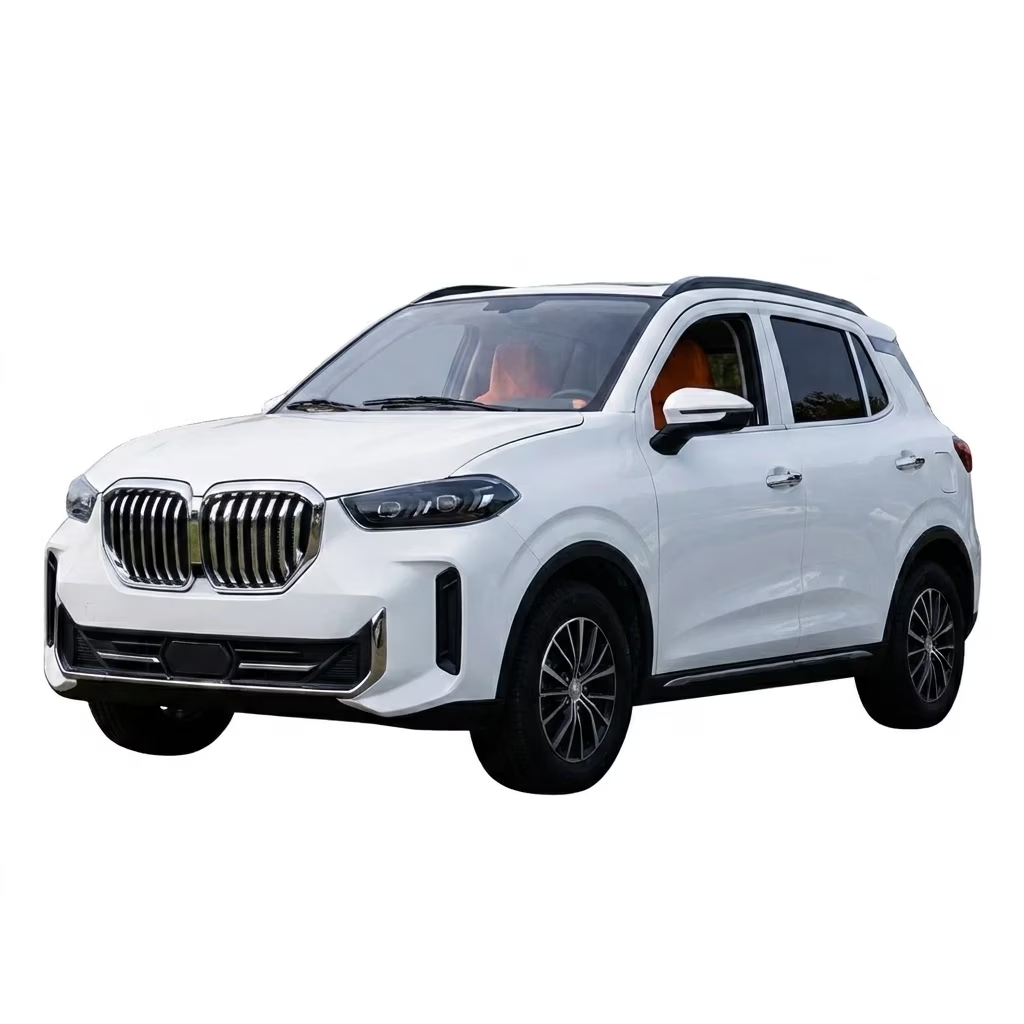
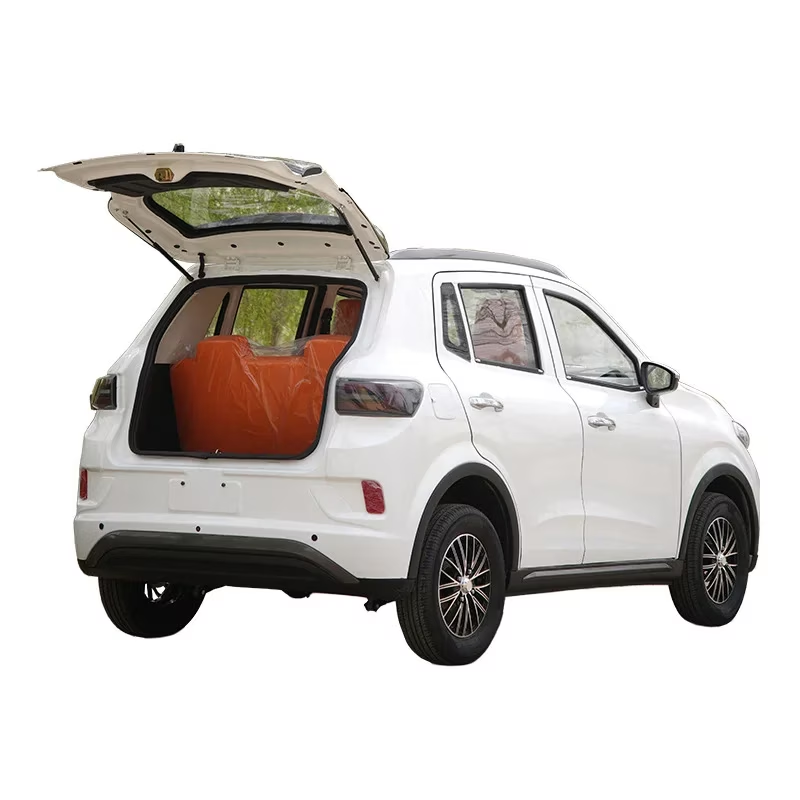
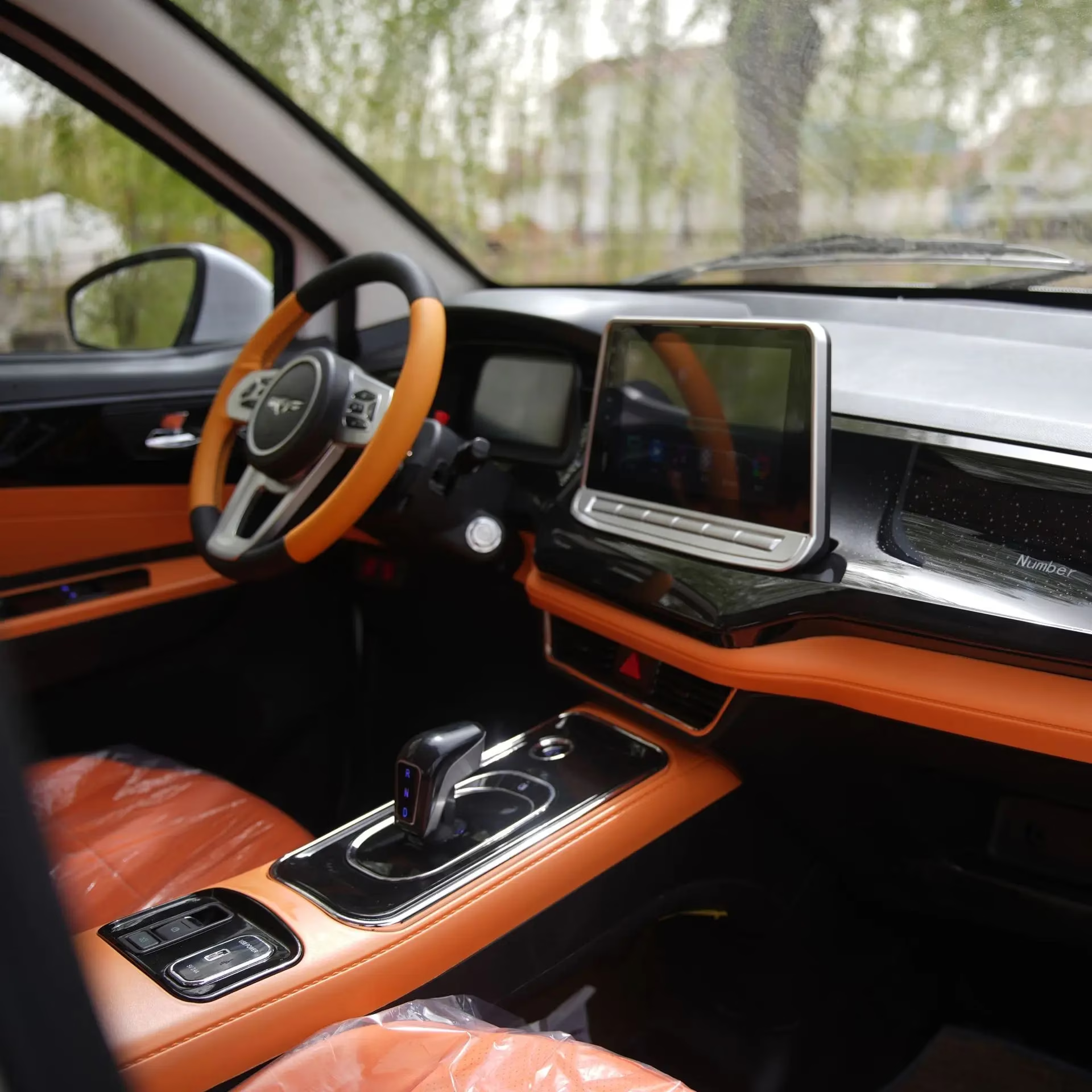
Description
Range is the number buyers fix on, and the one that most often turns out to be the wrong question. A 201–300 km NEDC figure on a compact enclosed car does not mean 300 km of real driving — it means the vehicle carries a large enough pack that daily use never touches the limit, and that occasional longer trips become possible.
This model is the long-range version of the compact enclosed platform, offered in five trim levels from a basic lead-acid build to an upgraded lithium pack. Below is what the range actually buys, how the trims differ, and the one question that decides whether the vehicle can be registered where you sell it.
What 201–300 km Actually Buys You
The NEDC test cycle is generous: steady speeds, moderate temperature, no climate control. Real consumption on a compact enclosed car runs 120–180 Wh per kilometre, so a 201–300 km rating corresponds to roughly a 15–25 kWh pack — and to 150–240 km of real mixed driving.
That is enough for three distinct use cases:
- Daily commuting without charging anxiety. A 40 km round trip uses under a third of the pack, which means charging twice a week rather than every night.
- Inter-city trips within a region. 150 km of real range covers a neighbouring city and back on one charge — the case a 100 km vehicle cannot serve.
- Fleet use with a single charging point. Fewer vehicles need to queue for the charger if each one covers two days of work.
What it does not buy: highway capability, fast charging, or winter range. Cold weather cuts usable capacity by 20–30%, which turns a 240 km real-world figure into 170 km in a cold climate.
The Five Trim Levels, and Which One to Order
The model list is a ladder, and the differences that matter are pack chemistry and equipment, not body:
| Trim | What it changes | Who it suits |
|---|---|---|
| Basic Style | Lead-acid pack, minimum equipment | Cost-first buyers, short urban routes, markets with cheap lead-acid replacement |
| Deluxe Version | Lead-acid, added comfort and trim | Retail buyers who want equipment but not lithium |
| Lithium-Ion Model | Lithium pack, lighter, more cycles | Daily-use fleets, hot climates, anyone charging partially |
| Premium Edition | Lithium plus full equipment list | Retail and hospitality buyers comparing with branded NEVs |
| Upgraded Lithium | Largest pack, longest range | Long-route users and markets where range is the selling point |
The commercial advice is simple: never quote the basic trim for a fleet. Lead-acid on a vehicle used twice a day will need replacement inside two years, and the replacement cost lands on your customer, not on the factory.
Motor, Battery and the Real Consumption Figure
Vehicles in this class typically run a 3–8 kW motor and a 5–14 kWh pack; the long-range trim sits at the top of both bands. Two figures to ask for in writing before you commit:
- Usable kWh, not nominal. A 20 kWh nominal pack may deliver 18 kWh usable. The gap decides real range.
- Consumption at your ambient temperature. A figure measured at 25°C is not the figure your customer will see at 0°C.
Also confirm the charger: this class charges from a domestic socket in 6–8 hours, and a wallbox halves that. If your market has 110V supply, the charge time roughly doubles — a detail that changes the fleet sizing calculation.
Air Conditioning and the Range Penalty
An enclosed car without climate control is uncomfortable in summer and fogs up in rain. If the vehicle has air conditioning, budget 10–20% of range for it in hot weather — the compressor draws continuously, unlike a cabin fan.
This is the single most common gap between a quoted range and a customer’s experience. It is worth stating in your own marketing material rather than letting a buyer discover it.
Specification
| Model | Urit compact enclosed electric car, long-range |
|---|---|
| Body | Fully enclosed, four-wheel, compact SUV profile |
| Drive | Electric, four-wheel |
| NEDC range | 201–300 km depending on trim |
| Typical real range | 150–240 km mixed driving (class typical) |
| Motor | 3–8 kW class typical, confirm per trim |
| Battery | Lead-acid or lithium; 15–25 kWh equivalent on long-range trims (class typical) |
| Charge time | 6–8 h domestic socket, faster on wallbox (class typical) |
| Seats | 4 (confirm per trim) |
| Equipment | Trim-dependent: air conditioning, power windows, display, reversing camera |
| Colours | Confirm per order |
| Certification | Ask which documents the factory can supply for your market |
| MOQ / Warranty | 1 unit / 12 months on motor, controller and battery |
Rows marked “class typical” describe this vehicle class rather than a fixed figure for every trim. The quotation confirms the exact configuration shipped.
Registration: The Question That Decides the Market
A 201–300 km enclosed four-wheeler is not automatically a road-legal car. In most markets it lands in a low-speed or quadricycle category with its own approval route, and in some markets no category exists at all.
Three things to settle before you plan a container:
- Which category will your authority put it in? Ask in writing, with the vehicle’s top speed and kerb weight to hand.
- What equipment does that category require? Lights, belts, mirrors, wipers, a VIN plate — the list varies and is not negotiable after approval.
- Can the factory supply conformity documents for this exact model? A certificate for a different body length or pack does not transfer.
Where the paperwork path is unclear, start with private-property and campus use and earn the road category later.
Frequently Asked Questions
Is 201–300 km NEDC realistic?
No test cycle is. Expect 150–240 km of mixed real driving, and 20–30% less in cold weather. The value of the long-range trim is that daily use never approaches the limit.
Which trim should an importer stock first?
The lithium model with the mid equipment list. It covers both fleet and retail buyers, avoids lead-acid replacement complaints, and sits at a price competitors cannot undercut with a lead-acid equivalent.
Can it be serviced locally?
Mechanically yes — brakes, suspension and bearings are conventional. Electrically, the controller and pack are the risk: confirm your market has a technician who can read the fault codes, or plan to hold one spare controller per ten vehicles.
What is the difference from a golf cart or LSV?
Body, speed and category. A golf cart is an open private-property vehicle; an LSV is a US road category capped at 25 mph; this is an enclosed four-wheeler built for longer distances, and its category depends entirely on your market.
Comparing ranges? The white low-speed mini EV is the short-route, lower-cost alternative on the same platform, and the 60V air-conditioned model covers hot-climate use. The electric mini EV range lists the full set. Tell us your route, climate and destination market, and we will quote the trim and loading quantity as one landed cost — send your requirement here.